 Kirchenakte
1337-1338 · 1 year
· show in timeline
Deggendorf 1337/38, murder of the Jewish community over an alleged desecration of the host and a pilgrimage lasting centuries
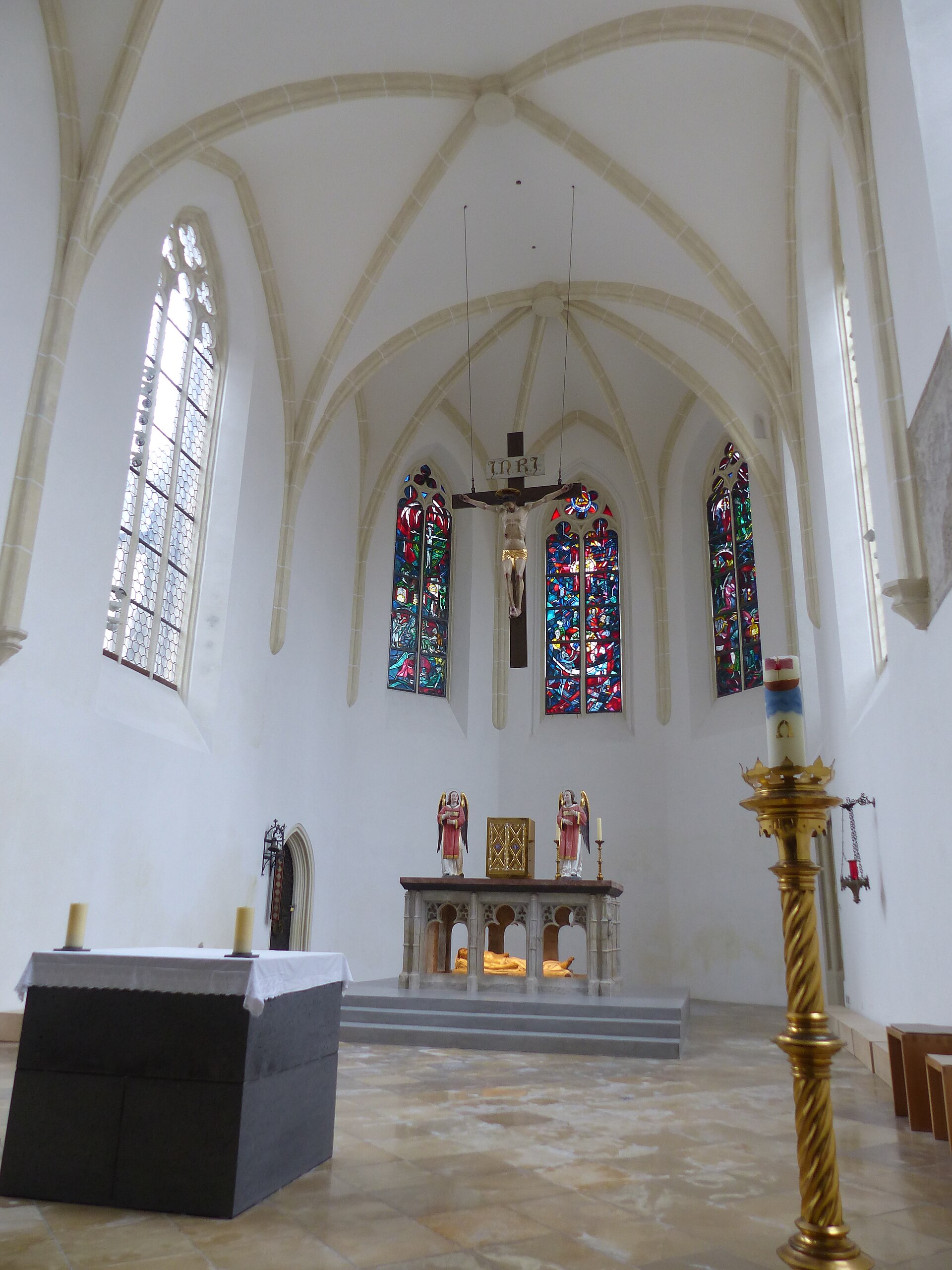
In 1337 or 1338 the entire Jewish population of Deggendorf in Lower Bavaria was murdered because they were accused of having desecrated consecrated hosts. The duke pardoned the murderers and commended them. A church was built on the spot, to which people made pilgrimages from all over Bavaria for centuries; according to the Britannica nearly 100,000 people came to the 500th anniversary in 1837. The story was still performed as a play around 1800.
- Period
- 1337-1338 (1 year)
- Country
- Germany
- Institutions
- Church of the Holy Sepulchre, Deggendorf
Duke of Bavaria - Category
- Anti-Judaism, Murder
- Level of evidence
- B two independent scholarly sources · what does this mean?

What happened to the people
Who was affected? Victims and numbers
- Because of the accusation of having desecrated the host, the entire Jewish population of Deggendorf was murdered. The sources date this differently: 1338 (Jewish Encyclopedia, article Bavaria), 30 September 1337 (Jewish Encyclopedia, article Host, Desecration of) or 1337 (Britannica). The agitation spread throughout Bavaria; Straubing and other Bavarian and Austrian places were also affected.
Evidence: Jewish Encyclopedia (1901–1906), Artikel Bavaria
„In 1338, on a charge of insulting the host, the whole Jewish population of Deggendorf was massacred, and the agitation spread thence over all Bavaria.“
Bavaria, Artikel Bavaria. Original Evidence: Jewish Encyclopedia (1901–1906), Artikel Host, Desecration of, Liste der Vorwürfe
„1337 (Sept. 30). Deggendorf, Straubing, and other Bavarian and Austrian towns“
Host, Desecration of, Artikel Host, Desecration of, Liste der Vorwürfe. Original Evidence: Encyclopædia Britannica, 11. Auflage, Bd. 7 (1911), Wikisource, Artikel Deggendorf
„In 1337 a wholesale massacre of the Jews, who were accused of having thrown the sacred host of the church of the Holy Sepulchre into a well, took place in the town“
Deggendorf, Artikel Deggendorf. Original
How were they charged and sentenced?
- There were no proceedings against the murderers: the duke pardoned the perpetrators of Deggendorf and Straubing and even commended them by decree.
Evidence: Jewish Encyclopedia (1901–1906), Artikel Bavaria
„The murderers at Deggendorf and Straubing were not only pardoned by the duke, but were honored by an edict of commendation“
Bavaria, Artikel Bavaria. Original
What happened to those affected?
- The story was performed as a play, as late as 1800 in Regen.
Evidence: Jewish Encyclopedia (1901–1906), Artikel Bavaria
„The whole episode was actually dramatized, and a representation of the play was given in Regen as late as the year 1800.“
Bavaria, Artikel Bavaria. Original
Background
Why? Justification and motives (according to the sources)
- The Jews were accused of having thrown the consecrated host of the Church of the Holy Sepulchre into a well. According to the Jewish Encyclopedia, such accusations were based on the doctrine of transubstantiation, which Innocent III had recognised in 1215 and which led to the public veneration of the host.
Evidence: Encyclopædia Britannica, 11. Auflage, Bd. 7 (1911), Wikisource, Artikel Deggendorf
„who were accused of having thrown the sacred host of the church of the Holy Sepulchre into a well“
Deggendorf, Artikel Deggendorf. Original Evidence: Jewish Encyclopedia (1901–1906), Artikel Host, Desecration of
„Innocent III. had recognized (1215) the doctrine of transubstantiation, which resulted in the public and general worship of the consecrated host“
Host, Desecration of, Artikel Host, Desecration of. Original
Response of the Church
- A memorial church was erected on the spot, to which, according to the Jewish Encyclopedia (1902), pilgrimages were made from all parts of Bavaria "until recently". In 1911 the Britannica writes that the Church of the Holy Sepulchre, built in 1337, attracts thousands of pilgrims to its "Gnadenpforte" (Gate of Mercy), which is opened annually from Michaelmas eve until 4 October. According to the Britannica, nearly 100,000 pilgrims came to the 500th anniversary in 1837. According to the Britannica, the pilgrimage probably came into vogue around the time of the massacre.
Evidence: Jewish Encyclopedia (1901–1906), Artikel Bavaria
„a memorial church was erected upon the spot, to which, until recently, pilgrimages were made from all parts of Bavaria“
Bavaria, Artikel Bavaria. Original Evidence: Encyclopædia Britannica, 11. Auflage, Bd. 7 (1911), Wikisource, Artikel Deggendorf
„the church of the Holy Sepulchre, built in 1337, which attracts thousands of pilgrims to its Porta Caeli or Gnadenpforte (Gate of Mercy) opened annually on Michaelmas eve and closed again on the 4th of October“
Deggendorf, Artikel Deggendorf. Original Evidence: Encyclopædia Britannica, 11. Auflage, Bd. 7 (1911), Wikisource, Artikel Deggendorf
„In 1837, on the celebration of the 500th anniversary of this solemnity, the number of pilgrims was reckoned at nearly 100,000.“
Deggendorf, Artikel Deggendorf. Original Evidence: Encyclopædia Britannica, 11. Auflage, Bd. 7 (1911), Wikisource, Artikel Deggendorf
„it is probably from about this date that the pilgrimage above mentioned came into vogue“
Deggendorf, Artikel Deggendorf. Original
Scholarly literature and reference works
- Reference work
Jewish Encyclopedia (1901–1906): Bavaria. Original (retrieved 15 Oct 2026) - Reference work
Jewish Encyclopedia (1901–1906): Host, Desecration of. Original (retrieved 15 Oct 2026) - Reference work
Encyclopædia Britannica, 11. Auflage, Bd. 7 (1911), Wikisource: Deggendorf, 1 January 1911. Original (retrieved 15 Oct 2026)
Change log (2)
The change log is kept in German only.
- : Aktualisiert: Englische Übersetzung
- : Aufgenommen
Last changed on 22 October 2026. Is something missing or wrong? Suggest an addition or correction.