 Kirchenakte
Martin Luther
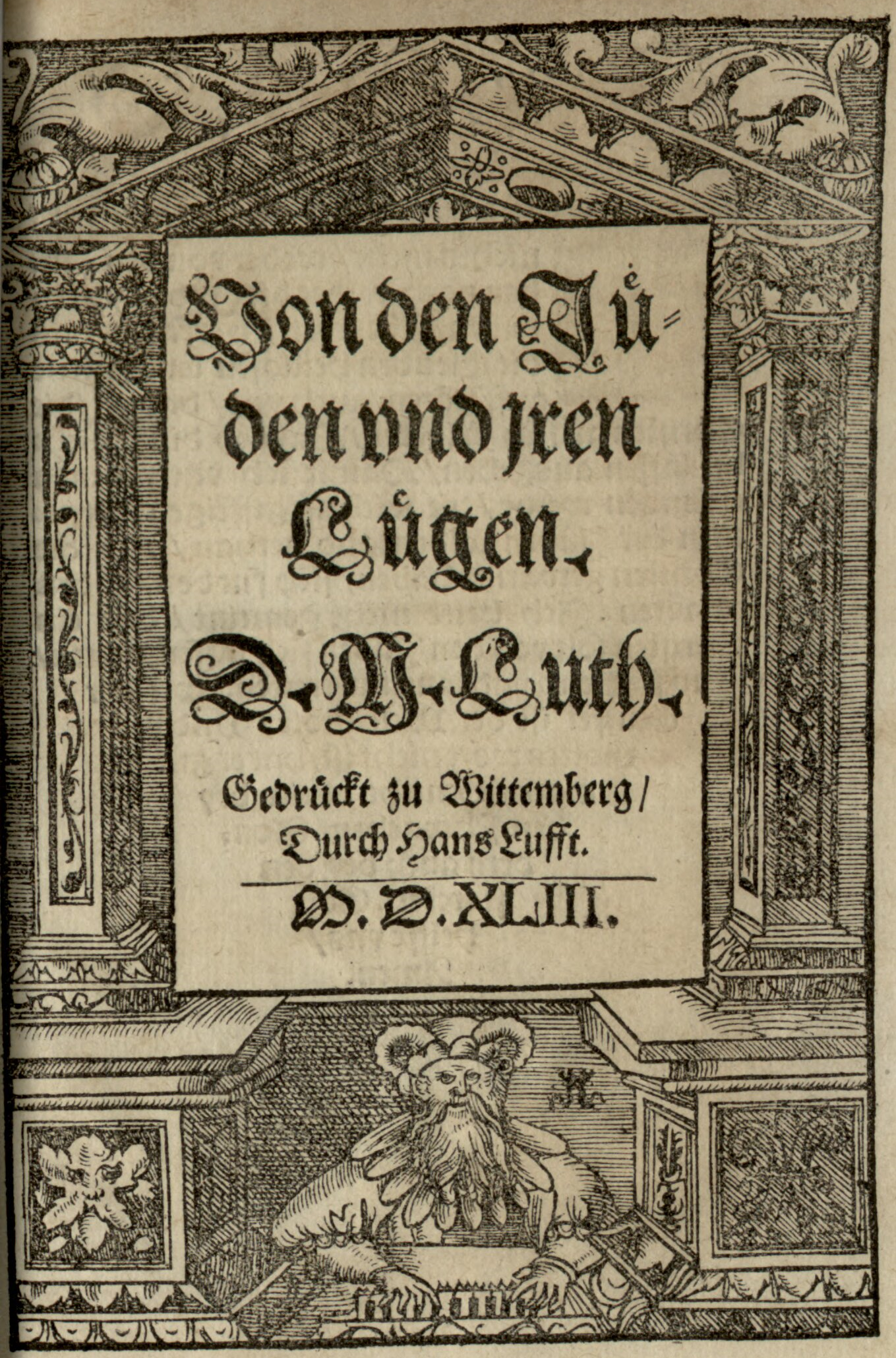
In 1520, with the bull Exsurge Domine, Pope Leo X condemned 41 propositions from Luther's writings and on 3 January 1521 expelled him from the Church with the bull Decet Romanum Pontificem. The Diet of Worms then declared him an outlaw. In 2013 the Lutheran/Roman Catholic Commission on Unity called the proceedings a tragedy. Luther himself recommended in 1543 in "On the Jews and Their Lies", among other things, burning synagogues; in 2015 the Evangelical Church in Germany spoke of the "undisguised hatred of Jews" in his late writings, which National Socialism also invoked. He did not cause the Peasants' War of 1525; peasant uprisings against the landlords had existed long before the Reformation. Luther at first called most of the peasants' demands justified, but then called on the princes to stab and strangle the rebels "like mad dogs".
- Life dates
- 10 Nov 1483-18 Feb 1546 (62 years old)
- Country
- Germany
- Institutions
- Holy See
Protestant Church - Category
- Anti-Judaism, Heresy trials
- Level of evidence
- A Primary source · what does this mean?
- Persons involved
- Leo X (Pope)
Josel of Rosheim (advocate of the Jews)
John Frederick of Saxony (Duke, expelled the Jews in 1537)

What happened to the people
Who was affected? Victims and numbers
- When Duke John Frederick of Saxony, a supporter of the Reformation, expelled the Jews from his land in 1537, Josel of Rosheim, the advocate of the Jews, asked Luther to intercede. Luther refused.
Evidence: Jewish Encyclopedia (1901–1906), Abschnitt „Hope of Conversion of Jews“
„In 1537, when Duke John Frederick of Saxony, who was a strong supporter of the Reformation, ordered the expulsion of the Jews from his country“
Luther, Martin (Gotthard Deutsch), Abschnitt „Hope of Conversion of Jews“. Original Evidence: Jewish Encyclopedia (1901–1906), Abschnitt „Hope of Conversion of Jews“
„Luther, however, refused to act, saying that the Jews had not appreciated the kindness he had shown them in his book“
Luther, Martin (Gotthard Deutsch), Abschnitt „Hope of Conversion of Jews“. Original
How were they charged and sentenced?
- On 15 June 1520 Pope Leo X issued the bull Exsurge Domine, which condemned 41 propositions from Luther's writings.
Evidence: Lutherisch/Römisch-katholische Kommission für die Einheit, Nr. 50, S. 27
„Thus the pope issued the bull Exsurge Domine (15 June 1520)“
From Conflict to Communion. Lutheran-Catholic Common Commemoration of the Reformation in 2017, Nr. 50, S. 27. Original Evidence: Lutherisch/Römisch-katholische Kommission für die Einheit, Nr. 50, S. 28
„which condemned forty-one propositions drawn from various publications by Luther“
From Conflict to Communion. Lutheran-Catholic Common Commemoration of the Reformation in 2017, Nr. 50, S. 28. Original - The pope gave Luther 60 days to recant, otherwise he faced excommunication.
Evidence: Lutherisch/Römisch-katholische Kommission für die Einheit, Nr. 50, S. 28
„Pope Leo gave Luther sixty days either to recant his »errors« or face excommunication“
From Conflict to Communion. Lutheran-Catholic Common Commemoration of the Reformation in 2017, Nr. 50, S. 28. Original - Luther was excommunicated on 3 January 1521 with the bull Decet Romanum Pontificem.
Evidence: Lutherisch/Römisch-katholische Kommission für die Einheit, Nr. 51, S. 28
„Luther was excommunicated by the bull Decet Romanum Pontificem on 3 January 1521“
From Conflict to Communion. Lutheran-Catholic Common Commemoration of the Reformation in 2017, Nr. 51, S. 28. Original
What happened to those affected?
- The Diet of Worms declared Luther an outlaw who was to be arrested or even killed.
Evidence: Lutherisch/Römisch-katholische Kommission für die Einheit, Nr. 57, S. 30
„The Diet of Worms made Luther an outlaw who had to be arrested or even killed“
From Conflict to Communion. Lutheran-Catholic Common Commemoration of the Reformation in 2017, Nr. 57, S. 30. Original - According to the EKD, Luther's anti-Jewish advice was invoked for National Socialist antisemitism.
Evidence: Synode der Evangelischen Kirche in Deutschland, Nr. 4
„Die Tatsache, dass die judenfeindlichen Ratschläge des späten Luther für den nationalsozialistischen Antisemitismus in Anspruch genommen wurden“
Kundgebung „Martin Luther und die Juden – Notwendige Erinnerung zum Reformationsjubiläum“, Nr. 4. Original - Luther's writings caused great fear among the Jews. In 1543 Josel of Rosheim wanted to publish a reply, which the council of Strasbourg did not permit; seven times he tried in vain to be admitted to Luther.
Evidence: Jewish Encyclopedia (1901–1906), Abschnitt „Von den Juden und Ihren Luegen“
„These books aroused grave fears among the Jews, and Josel Rosheim asked the city council of Strasburg to allow him to publish a book in refutation of Luther's pamphlets (July 11, 1543); but this the council considered unnecessary“
Luther, Martin (Gotthard Deutsch), Abschnitt „Von den Juden und Ihren Luegen“. Original Evidence: Jewish Encyclopedia (1901–1906), Abschnitt „Von den Juden und Ihren Luegen“
„Josel complains that although he made seven attempts to see Luther he was never admitted“
Luther, Martin (Gotthard Deutsch), Abschnitt „Von den Juden und Ihren Luegen“. Original
Background
Course of events
- Luther was born in Eisleben on 10 November 1483 and died there on 18 February 1546.
Evidence: The Catholic Encyclopedia, Bd. 9 (1910), Einleitung
„born at Eisleben, 10 November, 1483; died at Eisleben, 18 February, 1546“
Martin Luther, Einleitung. Original · Archive copy - Luther did not cause the Peasants' War. Uprisings of peasants against the arbitrary rule of their lords had existed long before the Reformation, for example in 1476, 1492, 1502 and 1514. In 1524/25, however, the peasants appealed to the Bible and to Luther.
Evidence: Philip Schaff (1888); Christian Classics Ethereal Library, § 76, Der Bauernkrieg
„Long before the Reformation revolutionary outbreaks took place in various parts of Germany,—a.d. 1476, 1492, 1493, 1502, 1513, and especially in 1514“
History of the Christian Church, Bd. 7: Modern Christianity. The German Reformation, § 76 The Peasants’ War, § 76, Der Bauernkrieg. Original Evidence: Philip Schaff (1888); Christian Classics Ethereal Library, § 76, Der Bauernkrieg
„They appealed to the Bible and to Dr. Luther in support of their grievances“
History of the Christian Church, Bd. 7: Modern Christianity. The German Reformation, § 76 The Peasants’ War, § 76, Der Bauernkrieg. Original - Luther at first answered the Twelve Articles of the Swabian peasants with an exhortation to peace: he called most of the demands justified and rebuked princes, nobility and especially the bishops for oppressing the poor, but also warned the peasants against rebellion.
Evidence: Philip Schaff (1888); Christian Classics Ethereal Library, § 76, Der Bauernkrieg
„He replied to the Twelve Articles of the Swabian peasants with an exhortation to peace“
History of the Christian Church, Bd. 7: Modern Christianity. The German Reformation, § 76 The Peasants’ War, § 76, Der Bauernkrieg. Original Evidence: Philip Schaff (1888); Christian Classics Ethereal Library, § 76, Der Bauernkrieg
„He admitted that most of them were just. He rebuked the princes and nobles, especially the bishops, for their oppression of the poor people“
History of the Christian Church, Bd. 7: Modern Christianity. The German Reformation, § 76 The Peasants’ War, § 76, Der Bauernkrieg. Original - When the uprising turned violent, Luther called on the authorities to stab, kill and strangle the rebellious peasants like mad dogs. The Encyclopaedia Britannica calls this writing a stain on his whole life.
Evidence: Philip Schaff (1888); Christian Classics Ethereal Library, § 76, Der Bauernkrieg
„He called upon the magistrates to "stab, kill, and strangle" them like mad dogs“
History of the Christian Church, Bd. 7: Modern Christianity. The German Reformation, § 76 The Peasants’ War, § 76, Der Bauernkrieg. Original Evidence: Encyclopædia Britannica, 11. Auflage (1911), Abschnitt zum Bauernkrieg
„Luther issued the pamphlet, which casts a stain on his whole life, in which he hounds on the ruling classes to suppress the insurgents with all violence“
Luther, Martin, Abschnitt zum Bauernkrieg. Original - In 1543 Luther wrote "On the Jews and Their Lies", in which he recommended to the authorities, among other things, burning synagogues, destroying Jewish houses, confiscating the Talmud and prayer books, a ban on trading and forced labour.
Evidence: Synode der Evangelischen Kirche in Deutschland, Nr. 7
„1543 verfasste er die Schrift "Von den Juden und ihren Lügen"“
Kundgebung „Martin Luther und die Juden – Notwendige Erinnerung zum Reformationsjubiläum“, Nr. 7. Original Evidence: Synode der Evangelischen Kirche in Deutschland, Nr. 7
„empfahl er am Ende dieser Schrift der weltlichen Obrigkeit u.a. die Verbrennung der Synagogen, die Zerstörung jüdischer Häuser, die Konfiszierung von Talmud und Gebetbüchern, Handelsverbot und Zwangsarbeit“
Kundgebung „Martin Luther und die Juden – Notwendige Erinnerung zum Reformationsjubiläum“, Nr. 7. Original - If that did not help, according to Luther, the Jews should be "driven out like mad dogs".
Evidence: Synode der Evangelischen Kirche in Deutschland, Nr. 7
„Wenn das nicht helfe, riet er, solle man die Juden "wie die tollen Hunde ausjagen"“
Kundgebung „Martin Luther und die Juden – Notwendige Erinnerung zum Reformationsjubiläum“, Nr. 7. Original - In 2015 the synod of the EKD described Luther's late writings from 1538 onwards as writings of undisguised hatred of Jews.
Evidence: Synode der Evangelischen Kirche in Deutschland, Nr. 5
„seinen späten Schriften ab 1538 mit ihrem unverhüllten Judenhass“
Kundgebung „Martin Luther und die Juden – Notwendige Erinnerung zum Reformationsjubiläum“, Nr. 5. Original - In 1523 Luther had still advocated friendly dealings with Jews, in the hope of their conversion.
Evidence: Synode der Evangelischen Kirche in Deutschland, Nr. 7
„Ein Zusammenleben von Juden und Christen konnte es für Luther nur auf Zeit und in der Hoffnung auf Bekehrung der Juden geben“
Kundgebung „Martin Luther und die Juden – Notwendige Erinnerung zum Reformationsjubiläum“, Nr. 7. Original
Why? Justification and motives (according to the sources)
- By his own account, Pope Leo X felt obliged to protect the "orthodox faith" from those who twisted Scripture.
Evidence: Lutherisch/Römisch-katholische Kommission für die Einheit, Nr. 50, S. 27
„Pope Leo X felt obliged to protect the »orthodox faith« from those who »twist and adulterate the Scriptures«“
From Conflict to Communion. Lutheran-Catholic Common Commemoration of the Reformation in 2017, Nr. 50, S. 27. Original - According to the EKD, Luther recommended persecution out of fear that tolerating the Jewish religion could bring God's wrath upon the Christians too. He wanted the princes to persecute the Jews without mercy and the preachers to stir up the mob against them. According to the Jewish Encyclopedia, it is not known with certainty what exactly triggered his change of mind.
Evidence: Synode der Evangelischen Kirche in Deutschland, Nr. 7
„Aus Angst, die Duldung der jüdischen Religion könne den Zorn Gottes auch über das christliche Gemeinwesen heraufbeschwören“
Kundgebung „Martin Luther und die Juden – Notwendige Erinnerung zum Reformationsjubiläum“, Nr. 7. Original Evidence: Jewish Encyclopedia (1901–1906), Einleitung
„He wishes the princes to persecute them mercilessly and the preachers to set the mob against them. What caused this change of attitude is not exactly known“
Luther, Martin (Gotthard Deutsch), Einleitung. Original
Original texts
steche, schlage, würge hie wer da kann. Bleibst du darüber todt: wohl dir, seliglicheren Tod kannst du nimmermehr überkommen. Denn du stirbst im Gehorsam göttlichs Worts und Befehls
Translation (unofficial)
Let whoever can stab, strike, strangle here. If you die in doing so: blessed are you, a more blessed death you can never attain. For you die in obedience to God's word and command.
See also
-
1300-1562 · 262 years
Sale of indulgences, forgiveness of sins for money
- Germany
- Vatican City
- United Kingdom
- Financial misconduct
Original documents to read
- Historical source (contemporary text)
Bayerische Staatsbibliothek, Münchener DigitalisierungsZentrum: Martin Luther: Wider die Mordischen vn[d] Reubischen Rotten der Bawren ([Augsburg]: Steiner, 1525), Digitalisat. Open document (retrieved 11 Oct 2026) - Historical source (contemporary text)
Columbia University Libraries, Burke Library: Martin Luther: Von den Jüden vnd jren Lügen (Wittenberg: Hans Lufft, 1543), Digitalisat. Open document (retrieved 11 Oct 2026) - Church document
Synode der Evangelischen Kirche in Deutschland: Kundgebung „Martin Luther und die Juden – Notwendige Erinnerung zum Reformationsjubiläum“, 11 November 2015. Original (retrieved 11 Oct 2026) - Commission report
Lutherisch/Römisch-katholische Kommission für die Einheit: From Conflict to Communion. Lutheran-Catholic Common Commemoration of the Reformation in 2017, 17 June 2013. Original (retrieved 11 Oct 2026)
Scholarly literature and reference works
- Reference work
Jewish Encyclopedia (1901–1906): Luther, Martin (Gotthard Deutsch). Original (retrieved 11 Oct 2026) - Scholarly literature
Philip Schaff (1888); Christian Classics Ethereal Library: History of the Christian Church, Bd. 7: Modern Christianity. The German Reformation, § 76 The Peasants’ War, 1 January 1888. Original (retrieved 11 Oct 2026) - Reference work
Encyclopædia Britannica, 11. Auflage (1911): Luther, Martin, 1 January 1911. Original (retrieved 11 Oct 2026) - Reference work
The Catholic Encyclopedia, Bd. 9 (1910): Martin Luther, 1 January 1910. Original · Archive copy (retrieved 11 Oct 2026)
Change log (13)
The change log is kept in German only.
- : Aktualisiert: Englische Übersetzung
- : Aktualisiert: Personen
- : Aktualisiert: Tatsachen, Kategorien, Zusammenfassung
- : Aktualisiert: Tatsachen, Todesopfer, Zusammenfassung
- : Aktualisiert: Tatsachen
- : Aktualisiert: Tatsachen
- : Aktualisiert: Todesopfer
- : Aktualisiert: Quellen
- : Aktualisiert: Tatsachen
- : Aktualisiert: Tatsachen, Quellen
- : Aktualisiert: Tatsachen
- : Aktualisiert: Tatsachen
- : Aktualisiert: Zeitzeugen und Originaltexte, Tatsachen, Kategorien, Quellen, Zusammenfassung
Last changed on 22 October 2026. Is something missing or wrong? Suggest an addition or correction.