 Kirchenakte
Expulsion of the Salzburg Protestants 1731/32 by Prince-Archbishop Firmian
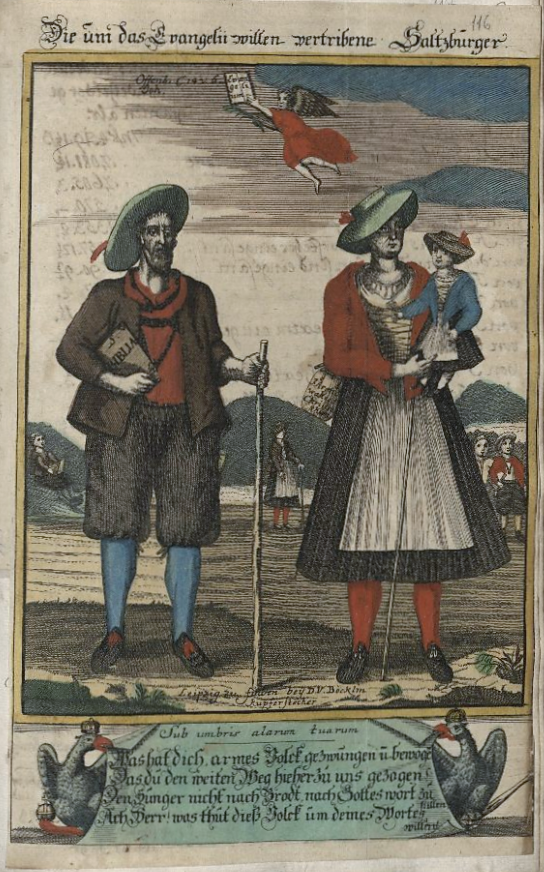
In 1731 the Prince-Archbishop of Salzburg, Leopold Anton von Firmian, who was also the territorial ruler, ordered that the non-Catholic population had to leave his territory within a set period. In 1731 and 1732 about 30,000 people left the country according to the Britannica and the Catholic Encyclopedia, about 20,000 according to the German Historical Institute. Most of them went in 26 columns to East Prussia, where the Prussian king had invited them.
- Period
- 1731-1732 (1 year)
- Country
- Austria
- Institutions
- Prince-Archbishopric of Salzburg
Prince-Archbishop Leopold Anton von Firmian - Category
- Expropriation, Persecution
- Level of evidence
- B two independent scholarly sources · what does this mean?
- Persons
- Leopold Anton von Firmian (Prince-Archbishop of Salzburg (reigned 1727-1744), ordered the expulsion)
Frederick William I of Prussia (King, received the expelled in East Prussia)
Wolf Dietrich (Archbishop of Salzburg (died 1611), had Protestant citizens expelled)

What happened to the people
Who was affected? Victims and numbers
- The number of those expelled is given differently: according to the Encyclopaedia Britannica (1911), Salzburg lost about 30,000 inhabitants in 1731 and 1732, about 6000 of them from the capital; according to the Catholic Encyclopedia, about 30,000 people left the territory within ten years; the German Historical Institute names about 20,000 Lutheran Protestants.
Evidence: Encyclopædia Britannica, 11. Auflage, Bd. 24 (1911), Wikisource, Artikel Salzburg (city), Abschnitt Geschichte
„in 1731 and 1732 Salzburg parted with about 30,000 industrious and peaceful citizens, about 6000 of these coming from the capital“
Salzburg (city), Artikel Salzburg (city), Abschnitt Geschichte. Original Evidence: Catholic Encyclopedia (1913), Wikisource, Artikel Archdiocese of Salzburg
„In ten years about 30,000 persons left the territory and settled in East Prussia, or in Wurtemberg or Hanoverian territory; a few emigrated to Georgia in North America.“
Archdiocese of Salzburg, Artikel Archdiocese of Salzburg. Original Evidence: Deutsches Historisches Institut Washington, German History in Documents and Images, Kurzbeschreibung
„Im Jahre 1731 vertrieb der Erzbischof von Salzburg, Leopold Anton Eleutherius Reichsfreiherr von Firmian (reg. 1727-1744) etwa 20.000 lutherische Protestanten aus seinem Herrschaftsgebiet“
Auszug der Salzburger Protestanten und ihre Ansiedlung in Preußen im Jahre 1732 (1734), Kurzbeschreibung. Original
How were they charged and sentenced?
- The basis was the emigration decree of 1731 issued by Archbishop Firmian: the non-Catholic population of Salzburg had to leave the country within a set period. The archbishop had previously brought in Jesuits as missionaries and asked the emperor for help; then he enforced the principle of the Peace of Augsburg: recantation or emigration.
Evidence: Deutsches Historisches Institut Washington, German History Intersections, Kurzbeschreibung
„Der Salzburger Erzbischof Leopold Anton von Firmian steht hinter dem sogenannten Emigrationserlass von 1731, laut dem die nichtkatholische Bevölkerung Salzburg binnen einer gegebenen Frist zu verlassen hatte.“
Dialog zwischen einem Salzburger „Exulanten“ und einem Waldenser (1732), aus: Die Seufftzende Saltzburger, Magdeburg 1732, Kurzbeschreibung. Original Evidence: Catholic Encyclopedia (1913), Wikisource, Artikel Archdiocese of Salzburg
„he invited the Jesuits as missionaries, and engaged the help of the emperor. Later he enforced the Decree of the religious Peace of Augsburg: recantation or emigration.“
Archdiocese of Salzburg, Artikel Archdiocese of Salzburg. Original
What happened to those affected?
- The expelled asked the Prussian king Frederick William I for help. He invited them to East Prussia, which had been depopulated by plague and war. Between April and July 1732 they moved to Prussia in 26 groups of about 800 people each. Others went to Württemberg, to Hanover or to Georgia in North America.
Evidence: Encyclopædia Britannica, 11. Auflage, Bd. 24 (1911), Wikisource, Artikel Salzburg (city), Abschnitt Geschichte
„The Protestants invoked the aid of Frederick William I. of Prussia“
Salzburg (city), Artikel Salzburg (city), Abschnitt Geschichte. Original Evidence: Deutsches Historisches Institut Washington, German History in Documents and Images, Kurzbeschreibung
„akzeptierten viele eine Einladung Friedrich Wilhelms I. von Preußen“
Auszug der Salzburger Protestanten und ihre Ansiedlung in Preußen im Jahre 1732 (1734), Kurzbeschreibung. Original Evidence: Deutsches Historisches Institut Washington, German History in Documents and Images, Kurzbeschreibung
„Zwischen April und Juli 1732 marschierten die Salzburger Protestanten in 26 Gruppen, von denen jede etwa 800 Personen umfasste, nach Preußen.“
Auszug der Salzburger Protestanten und ihre Ansiedlung in Preußen im Jahre 1732 (1734), Kurzbeschreibung. Original Evidence: Catholic Encyclopedia (1913), Wikisource, Artikel Archdiocese of Salzburg
„settled in East Prussia, or in Wurtemberg or Hanoverian territory; a few emigrated to Georgia in North America“
Archdiocese of Salzburg, Artikel Archdiocese of Salzburg. Original - According to the same pamphlet, the passes were occupied, letters were opened at the borders, and anyone who sought help elsewhere was arrested and treated as a rebel.
Evidence: Deutsches Historisches Institut Washington, German History Intersections, Quelle, Magdeburg 1732, S. 5f.
„Alle Pässe sind besezet, daß neimand aus- oder einziehen kan. Alle Briefe werden an den Gräntzen erbrochen, welche aus- oder eingehen.“
Dialog zwischen einem Salzburger „Exulanten“ und einem Waldenser (1732), aus: Die Seufftzende Saltzburger, Magdeburg 1732, Quelle, Magdeburg 1732, S. 5f.. Original Evidence: Deutsches Historisches Institut Washington, German History Intersections, Quelle, Magdeburg 1732, S. 5f.
„Alle Personen werden gefangen genommen, und als Rebellen angesehen, die an andern Orten Hülffe suchen wollen“
Dialog zwischen einem Salzburger „Exulanten“ und einem Waldenser (1732), aus: Die Seufftzende Saltzburger, Magdeburg 1732, Quelle, Magdeburg 1732, S. 5f.. Original
Witness accounts and records
Wir werden vor dem gesezten Termin ausgetrieben, der uns doch in denen Reichs-Gesetzen mit ausdrücklichen Worten bestimmet ißt. Wir durfften dasjenige nicht mit uns nehmen, was uns doch als unser Eigenthum gehöret.
Translation (unofficial)
We are being driven out before the set deadline, which is expressly fixed for us in the laws of the Empire. We were not allowed to take with us what belongs to us as our property.
Background
Course of events
- There had been expulsions in Salzburg before: under Archbishop Wolf Dietrich (died 1611) many Protestant citizens were expelled from the city and their houses demolished. Despite harsh persecution the new faith continued to spread.
Evidence: Encyclopædia Britannica, 11. Auflage, Bd. 24 (1911), Wikisource, Artikel Salzburg (city), Abschnitt Geschichte
„Under Archbishop Wolfgang Dietrich (d. 1611) many Protestant citizens were driven from the town and their houses demolished. In spite, however, of rigorous persecution the new faith spread“
Salzburg (city), Artikel Salzburg (city), Abschnitt Geschichte. Original - A Protestant church was built in the city of Salzburg only in 1865.
Evidence: Encyclopædia Britannica, 11. Auflage, Bd. 24 (1911), Wikisource, Artikel Salzburg (city)
„Protestant church in Salzburg was not built until 1865“
Salzburg (city), Artikel Salzburg (city). Original
Why? Justification and motives (according to the sources)
- According to the Britannica, Salzburg was from the beginning a stronghold of the Roman Catholic faith and energetically opposed the Reformation. According to the Catholic Encyclopedia, Protestant tendencies spread more vigorously than before under Firmian; the Lutherans in the territory joined together in a league bound by oath. The archbishop brought in Jesuits as missionaries and finally enforced "recantation or emigration".
Evidence: Encyclopædia Britannica, 11. Auflage, Bd. 24 (1911), Wikisource, Artikel Salzburg (city), Abschnitt Geschichte
„From the beginning an orthodox stronghold of the Roman Catholic faith, Salzburg energetically opposed the Reformation.“
Salzburg (city), Artikel Salzburg (city), Abschnitt Geschichte. Original Evidence: Catholic Encyclopedia (1913), Wikisource, Artikel Archdiocese of Salzburg
„Protestant tendencies revealed themselves more vigorously than before“
Archdiocese of Salzburg, Artikel Archdiocese of Salzburg. Original Evidence: Catholic Encyclopedia (1913), Wikisource, Artikel Archdiocese of Salzburg
„the Lutherans of the Salzburg territory formed a league, binding themselves by oath“
Archdiocese of Salzburg, Artikel Archdiocese of Salzburg. Original
Who received the assets, who profited?
- According to the Britannica, the Prussian king obtained permission for the expelled to sell their property. A pamphlet from 1732, by contrast, has an expelled man complain that they were not allowed to take their property with them and were driven out before the deadline fixed by imperial law.
Evidence: Encyclopædia Britannica, 11. Auflage, Bd. 24 (1911), Wikisource, Artikel Salzburg (city), Abschnitt Geschichte
„who procured for them permission to sell their goods and to emigrate“
Salzburg (city), Artikel Salzburg (city), Abschnitt Geschichte. Original Evidence: Deutsches Historisches Institut Washington, German History Intersections, Quelle, Magdeburg 1732, S. 5f.
„Wir durfften dasjenige nicht mit uns nehmen, was uns doch als unser Eigenthum gehöret.“
Dialog zwischen einem Salzburger „Exulanten“ und einem Waldenser (1732), aus: Die Seufftzende Saltzburger, Magdeburg 1732, Quelle, Magdeburg 1732, S. 5f.. Original
Original documents to read
- Historical source (contemporary text)
Deutsches Historisches Institut Washington, German History Intersections: Dialog zwischen einem Salzburger „Exulanten“ und einem Waldenser (1732), aus: Die Seufftzende Saltzburger, Magdeburg 1732, 1 January 1732. Original (retrieved 15 Oct 2026)
Scholarly literature and reference works
- Reference work
Encyclopædia Britannica, 11. Auflage, Bd. 24 (1911), Wikisource: Salzburg (city), 1 January 1911. Original (retrieved 15 Oct 2026) - Reference work
Catholic Encyclopedia (1913), Wikisource: Archdiocese of Salzburg, 1 January 1913. Original (retrieved 15 Oct 2026) - Scholarly literature
Deutsches Historisches Institut Washington, German History in Documents and Images: Auszug der Salzburger Protestanten und ihre Ansiedlung in Preußen im Jahre 1732 (1734). Original (retrieved 15 Oct 2026)
Change log (3)
The change log is kept in German only.
- : Aktualisiert: Englische Übersetzung
- : Aktualisiert: Tatsachen
- : Aufgenommen
Last changed on 22 October 2026. Is something missing or wrong? Suggest an addition or correction.