 Kirchenakte
Person 1180-1233 · about 53 years old
· show in timeline
Conrad of Marburg, papal persecutor of heretics in Germany
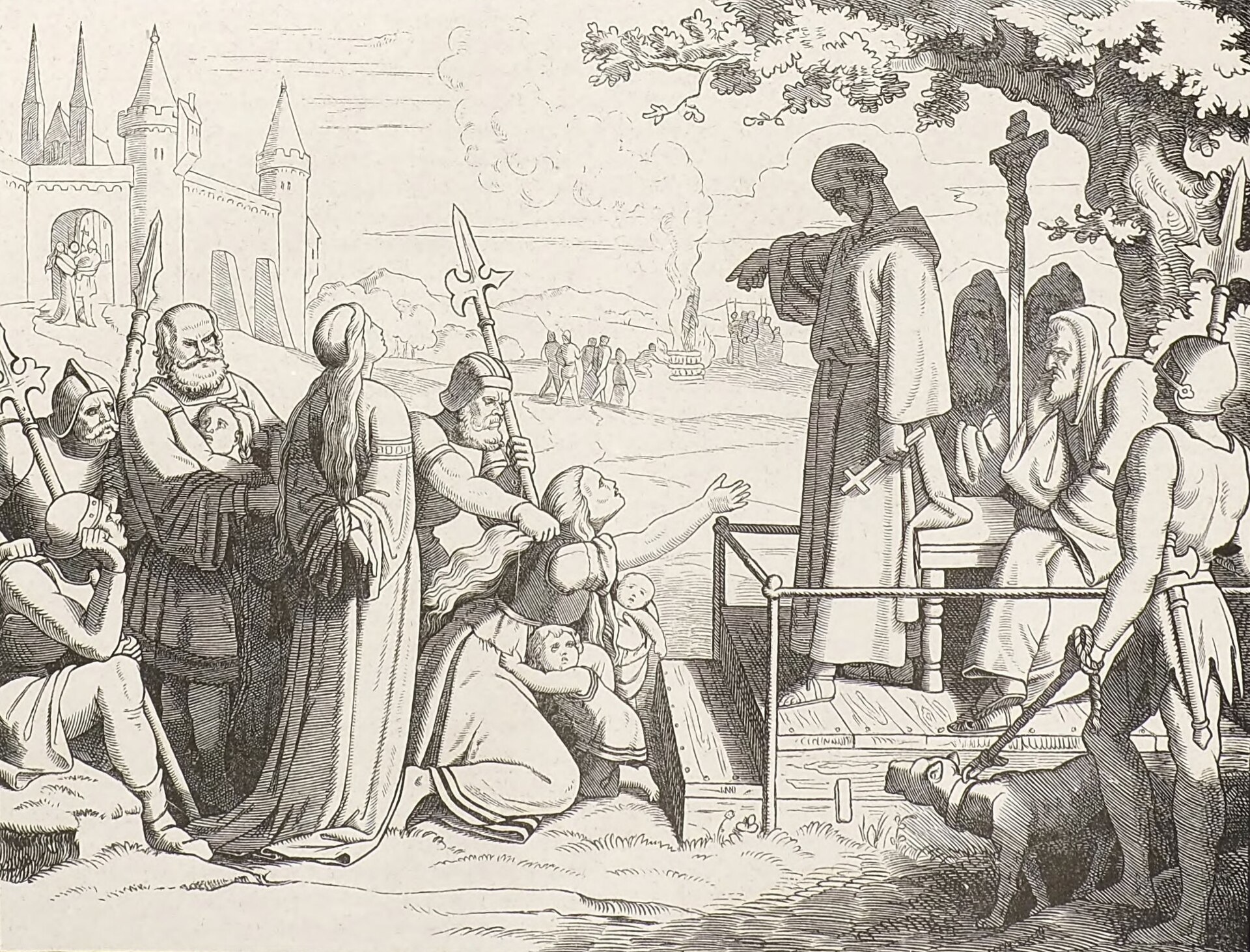
From 1227 the priest Conrad of Marburg was, on behalf of Pope Gregory IX, the first persecutor of heretics for the whole of Germany. In 1231 the pope gave him authority to pass judgment without hearing and without appeal. Those accused had only one choice: confess and name accomplices, or be burned. This produced chains of false accusations in which brother denounced brother and wife denounced husband. As confessor, he had Elisabeth of Thuringia and her maids flogged. He was murdered in 1233; the Church buried him next to Elisabeth.
- Life dates
- 1180-1233 (about 53 years old)
- Country
- Germany
- Institutions
- Holy See
Pope Gregory IX - Category
- Violence, Heresy trials, Persecution
- Level of evidence
- B two independent scholarly sources · what does this mean?
- Persons involved
- Gregory IX (Pope, commissioned Conrad in 1227)
Elisabeth of Thuringia (widowed landgravine, Conrad's penitent)
Conrad Tors (Conrad's associate)

What happened to the people
Who was affected? Victims and numbers
- In Marburg he had many suspects arrested, among them knights and priests; those who did not recant were burned. In 1232 he had four more people burned in Erfurt. He had a vagrant woman who wanted revenge on her family sent to her home town, where she brought about the burning of her relatives.
Evidence: Harper & Brothers; Project Gutenberg (eBook 39458), Bd. 2, Kap. Germany, S. 332
„In Marburg itself many suspects were seized, including knights, priests, and persons of condition, of whom some recanted and the rest were burned“
Henry Charles Lea, A History of the Inquisition of the Middle Ages, Bd. 2 (New York 1888), Bd. 2, Kap. Germany, S. 332. Original Evidence: Harper & Brothers; Project Gutenberg (eBook 39458), Bd. 2, Kap. Germany, S. 332
„On one excursion to Erfurt, moreover, in 1232, he took the opportunity to burn four more victims“
Henry Charles Lea, A History of the Inquisition of the Middle Ages, Bd. 2 (New York 1888), Bd. 2, Kap. Germany, S. 332. Original Evidence: Harper & Brothers; Project Gutenberg (eBook 39458), Bd. 2, Kap. Germany, S. 337
„sent her with his assistants to Clavelt, whence she came, where she caused the burning of her kindred“
Henry Charles Lea, A History of the Inquisition of the Middle Ages, Bd. 2 (New York 1888), Bd. 2, Kap. Germany, S. 337. Original
How were they charged and sentenced?
- On 12 June 1227 Pope Gregory IX commissioned him to track down and prosecute heretics in Germany, with the right to appoint assistants at will. In October 1231 the pope extended his authority: Conrad did not even have to hear the cases, only to pass judgment, finally and without appeal.
Evidence: Harper & Brothers; Project Gutenberg (eBook 39458), Bd. 2, Kap. Germany, S. 329
„June 12, eight days before the commission issued to Giovanni di Salerno, Gregory wrote to Conrad commending highly the diligence with which he was tracking and pursuing heretics“
Henry Charles Lea, A History of the Inquisition of the Middle Ages, Bd. 2 (New York 1888), Bd. 2, Kap. Germany, S. 329. Original Evidence: Harper & Brothers; Project Gutenberg (eBook 39458), Bd. 2, Kap. Germany, S. 332
„he was not even required to hear the cases, but only to pronounce judgment, which was to be final and without appeal“
Henry Charles Lea, A History of the Inquisition of the Middle Ages, Bd. 2 (New York 1888), Bd. 2, Kap. Germany, S. 332. Original - The accused had only the choice of confessing what was demanded and doing penance, or being burned for denying it. Those who confessed had their heads shaved and had to name everyone they had seen at the alleged nocturnal gatherings. There was no defence.
Evidence: Harper & Brothers; Project Gutenberg (eBook 39458), Bd. 2, Kap. Germany, S. 336
„the accused was allowed simply the option of confessing what was demanded of him, and receiving penance, or of being burned for denial“
Henry Charles Lea, A History of the Inquisition of the Middle Ages, Bd. 2 (New York 1888), Bd. 2, Kap. Germany, S. 336. Original Evidence: Harper & Brothers; Project Gutenberg (eBook 39458), Bd. 2, Kap. Germany, S. 336
„he devised the penance of shaving the head as a mark of humiliation for his converts, who were moreover, of course, obliged to give the names of all whom they had seen in the hideous nocturnal assemblies“
Henry Charles Lea, A History of the Inquisition of the Middle Ages, Bd. 2 (New York 1888), Bd. 2, Kap. Germany, S. 336. Original Evidence: Harper & Brothers; Project Gutenberg (eBook 39458), Bd. 2, Kap. Germany, S. 337
„As no one had the slightest opportunity of defence, some steadfast men preferred to be burned and thus earn salvation, rather than to confess to lies and falsely accuse others“
Henry Charles Lea, A History of the Inquisition of the Middle Ages, Bd. 2 (New York 1888), Bd. 2, Kap. Germany, S. 337. Original - When Conrad accused the powerful Count of Sayn, an assembly of princes and bishops in Mainz examined the case. Witnesses testified that they had had to accuse the count to save their own lives; the count was acquitted.
Evidence: Harper & Brothers; Project Gutenberg (eBook 39458), Bd. 2, Kap. Germany, S. 340
„others felt emboldened to declare that they had been forced to accuse the count in order to save their own lives“
Henry Charles Lea, A History of the Inquisition of the Middle Ages, Bd. 2 (New York 1888), Bd. 2, Kap. Germany, S. 340. Original Evidence: Encyclopaedia Britannica, 11. Auflage (1911), Wikisource, Hauptteil
„An assembly at Mainz of bishops and princes declared Henry innocent, but Conrad demanded that this sentence should be reversed“
Conrad of Marburg, Hauptteil. Original
What happened to those affected?
- The Archbishop of Mainz reported to the pope: brother accused brother, wife accused husband, master accused servant. One man later confessed to having induced Conrad to condemn several innocent people. The Archbishops of Mainz, Trier and Cologne urged Conrad to moderation; he refused.
Evidence: Harper & Brothers; Project Gutenberg (eBook 39458), Bd. 2, Kap. Germany, S. 337, Bericht an den Papst
„brother accused brother, the wife the husband, and the master the servant“
Henry Charles Lea, A History of the Inquisition of the Middle Ages, Bd. 2 (New York 1888), Bd. 2, Kap. Germany, S. 337, Bericht an den Papst. Original Evidence: Harper & Brothers; Project Gutenberg (eBook 39458), Bd. 2, Kap. Germany, S. 337
„a certain Amfrid, who finally confessed that he had led Conrad to condemn a number of innocent men“
Henry Charles Lea, A History of the Inquisition of the Middle Ages, Bd. 2 (New York 1888), Bd. 2, Kap. Germany, S. 337. Original Evidence: Harper & Brothers; Project Gutenberg (eBook 39458), Bd. 2, Kap. Germany, S. 337, Bericht an den Papst
„warned Master Conrad to proceed in so great a matter with more moderation and discretion, but he refused“
Henry Charles Lea, A History of the Inquisition of the Middle Ages, Bd. 2 (New York 1888), Bd. 2, Kap. Germany, S. 337, Bericht an den Papst. Original - As confessor to the widowed Landgravine Elisabeth of Thuringia, then 18 years old, he had her and her maids stripped to their shifts and flogged, beat her when she disobeyed and drove away her trusted maids. Elisabeth died at the age of 24 from the effects of her asceticism.
Evidence: Harper & Brothers; Project Gutenberg (eBook 39458), Bd. 2, Kap. Germany, S. 327
„he caused them all to be stripped to their shifts and soundly scourged“
Henry Charles Lea, A History of the Inquisition of the Middle Ages, Bd. 2 (New York 1888), Bd. 2, Kap. Germany, S. 327. Original Evidence: Harper & Brothers; Project Gutenberg (eBook 39458), Bd. 2, Kap. Germany, S. 328
„When she disobeyed his orders he used to beat her and strike her“
Henry Charles Lea, A History of the Inquisition of the Middle Ages, Bd. 2 (New York 1888), Bd. 2, Kap. Germany, S. 328. Original Evidence: Harper & Brothers; Project Gutenberg (eBook 39458), Bd. 2, Kap. Germany, S. 326 f.
„a mother at fourteen, a widow at twenty, and dying of self-inflicted“
Henry Charles Lea, A History of the Inquisition of the Middle Ages, Bd. 2 (New York 1888), Bd. 2, Kap. Germany, S. 326 f.. Original
Background
Course of events
- Conrad of Marburg was born around 1180, probably in Marburg, and was murdered near Marburg at the end of July 1233: on 30 July according to the Encyclopaedia Britannica, on 31 July according to Lea.
Evidence: Encyclopaedia Britannica, 11. Auflage (1911), Wikisource, Einleitung
„CONRAD OF MARBURG ( c. 1180–1233), German inquisitor, was born probably at Marburg“
Conrad of Marburg, Einleitung. Original Evidence: Encyclopaedia Britannica, 11. Auflage (1911), Wikisource, Schluss
„he was murdered near Marburg on the 30th of July 1233“
Conrad of Marburg, Schluss. Original Evidence: Harper & Brothers; Project Gutenberg (eBook 39458), Bd. 2, Kap. Germany, S. 341
„lay in wait for him near Marburg and despatched him, July 31, regardless of his entreaties for mercy“
Henry Charles Lea, A History of the Inquisition of the Middle Ages, Bd. 2 (New York 1888), Bd. 2, Kap. Germany, S. 341. Original
Why? Justification and motives (according to the sources)
- Conrad sent the pope descriptions of alleged devil rituals with a toad, a black tomcat and orgies, which he had obtained from the confessions. Gregory IX believed them and wrote that even extermination without regard to sex or age would not be sufficient punishment; Conrad was to preach a crusade against them.
Evidence: Harper & Brothers; Project Gutenberg (eBook 39458), Bd. 2, Kap. Germany, S. 334
„Its hideous rites were described in full detail by Master Conrad to Pope Gregory“
Henry Charles Lea, A History of the Inquisition of the Middle Ages, Bd. 2 (New York 1888), Bd. 2, Kap. Germany, S. 334. Original Evidence: Harper & Brothers; Project Gutenberg (eBook 39458), Bd. 2, Kap. Germany, S. 336, Brief Gregors IX.
„wiping them from the face of the earth without sparing sex or age“
Henry Charles Lea, A History of the Inquisition of the Middle Ages, Bd. 2 (New York 1888), Bd. 2, Kap. Germany, S. 336, Brief Gregors IX.. Original Evidence: Harper & Brothers; Project Gutenberg (eBook 39458), Bd. 2, Kap. Germany, S. 336
„Conrad was instructed forthwith to preach a crusade against them“
Henry Charles Lea, A History of the Inquisition of the Middle Ages, Bd. 2 (New York 1888), Bd. 2, Kap. Germany, S. 336. Original
Who received the assets, who profited?
- The Imperial Diet of Worms decided in 1231 on the property of the condemned: allodial land and movable goods to the heirs, fiefs to the feudal lord. Conrad's associate Conrad Tors deliberately directed his attacks against the wealthy and lured the nobility with the prospect of confiscations that would be shared.
Evidence: Harper & Brothers; Project Gutenberg (eBook 39458), Bd. 2, Kap. Germany, S. 331
„the Diet of Worms, on June 2 of the same year, had decided that the allodial lands and the movables should go to the heirs, the fiefs to the lord“
Henry Charles Lea, A History of the Inquisition of the Middle Ages, Bd. 2 (New York 1888), Bd. 2, Kap. Germany, S. 331. Original Evidence: Harper & Brothers; Project Gutenberg (eBook 39458), Bd. 2, Kap. Germany, S. 333
„directing his attacks against the more wealthy, and holding out the prospect of extensive confiscations to be divided“
Henry Charles Lea, A History of the Inquisition of the Middle Ages, Bd. 2 (New York 1888), Bd. 2, Kap. Germany, S. 333. Original
Response of the Church
- Conrad was buried in Marburg next to Elisabeth; his remains were later moved with hers to St Elisabeth's Church.
Evidence: Harper & Brothers; Project Gutenberg (eBook 39458), Bd. 2, Kap. Germany, S. 341
„The body was carried to Marburg and buried by the side of St. Elizabeth, and when the latter was translated to the magnificent Elizabethskirche, his bones were likewise carried thither“
Henry Charles Lea, A History of the Inquisition of the Middle Ages, Bd. 2 (New York 1888), Bd. 2, Kap. Germany, S. 341. Original
See also
-
1231-1542 · 311 years
The Inquisition: origins, procedure, punishments
- Germany
- France
- Italy
- Spain
- Vatican City
- Expropriation
- Torture
- Heresy trials
- Persecution
-
1430-1793 · 363 years
Witch hunts in Europe
- Germany
- France
- Poland
- Switzerland
- Spain
- United Kingdom
- Torture
- Murder
- Persecution
Scholarly literature and reference works
- Scholarly literature
Harper & Brothers; Project Gutenberg (eBook 39458): Henry Charles Lea, A History of the Inquisition of the Middle Ages, Bd. 2 (New York 1888). Original (retrieved 11 Oct 2026) - Reference work
Encyclopaedia Britannica, 11. Auflage (1911), Wikisource: Conrad of Marburg, 1 January 1911. Original (retrieved 11 Oct 2026)
Change log (3)
The change log is kept in German only.
- : Aktualisiert: Englische Übersetzung
- : Aktualisiert: Personen
- : Aufgenommen
Last changed on 22 October 2026. Is something missing or wrong? Suggest an addition or correction.