 Kirchenakte
The Inquisition: origins, procedure, punishments
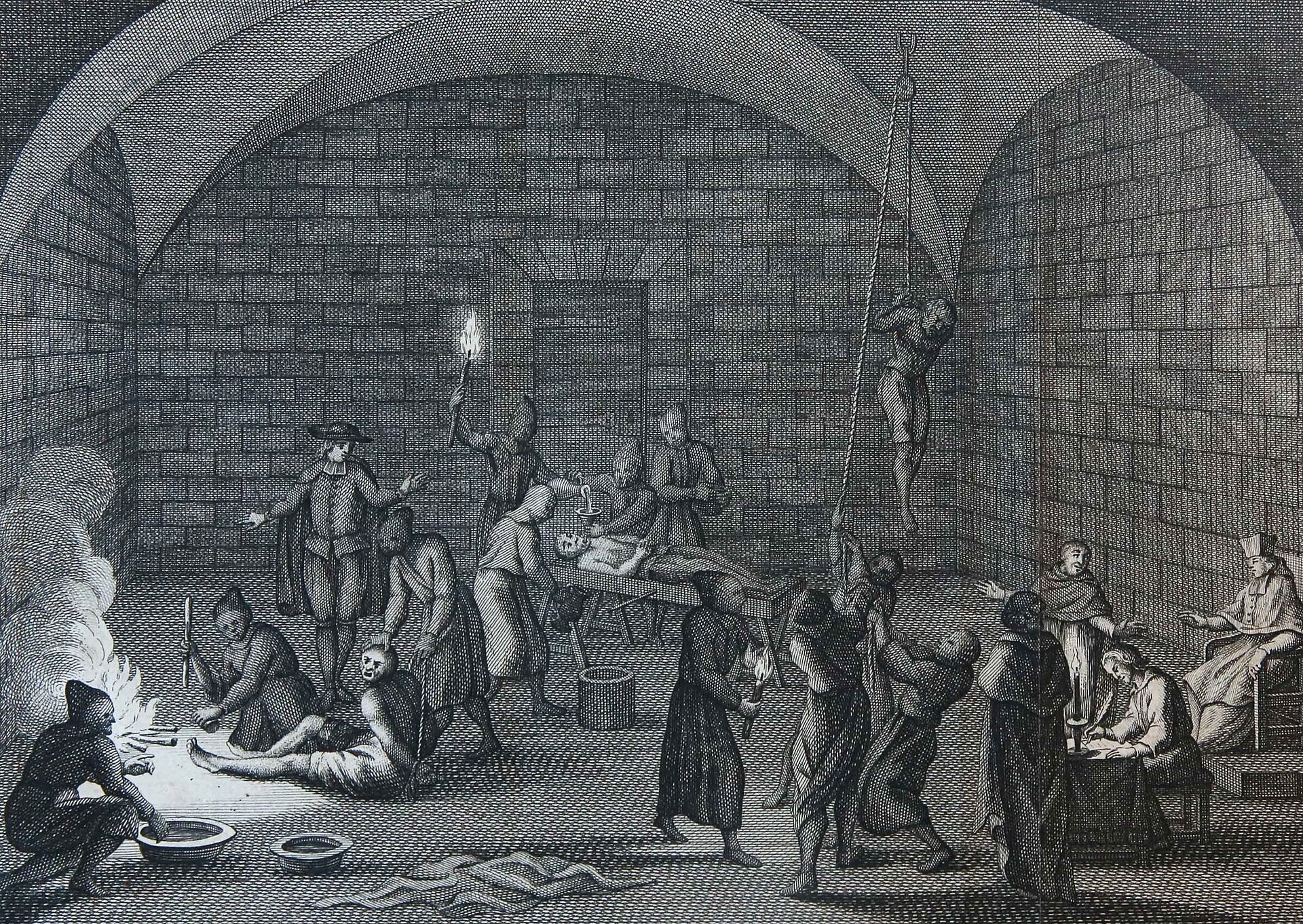
The Inquisition was a church court against religious dissenters. From 1231 canon law adopted the imperial laws that threatened heretics with death, banishment and confiscation of property; the inquisitors, mostly Dominicans, judged in the name of the pope. The accused did not learn who had accused them; in 1252 Pope Innocent IV permitted torture. The punishments ranged from penances, pilgrimages and public flogging through yellow crosses sewn onto clothing and life imprisonment to handing over to the secular power, that is, death by fire. When property was confiscated, wives and children suffered most. In 1542 the Roman Inquisition was established; the Spanish Inquisition lasted until 1834.
Evidence: The Catholic Encyclopedia, Bd. 8 (1910)
„only forty-two out of nine hundred and thirty bear the ominous note“
- Period
- 1231-1542 (311 years)
- Acknowledgement by the Church
- 462 years later, on 15 June 2004: „The institution of the Inquisition has been abolished“ (Letter to Card. Roger Etchegaray on the occasion of the publication of the volume containing the Proceedings of the International Symposium on the Inquisition, Original)
- Country
- Germany, France, Italy, Spain, Vatican City
- Institutions
- Holy See
Dominican Order
Franciscan Order
Roman Inquisition (Holy Office)
Spanish Inquisition - Category
- Expropriation, Torture, Heresy trials, Persecution
- Level of evidence
- A Primary source · what does this mean?
- Persons
- Innocent IV (Pope)
Gregory IX (Pope)
Bernard Gui (Inquisitor)
Frederick II (Holy Roman Emperor)
Alphonse of Poitiers (Count of Toulouse from 1249, financed the Inquisition)

What happened to the people
Who was affected? Victims and numbers
- Handing over to the secular power meant death by fire.
Evidence: Encyclopædia Britannica, 11. Auflage (1911), Abschnitt zum Verfahren
„handing over to the secular arm was equivalent to a sentence of death, and of death by fire“
Inquisition, The, Abschnitt zum Verfahren. Original - According to the Catholic Encyclopedia, it is not possible to say even approximately how many people in total were handed over to the secular power. Documented individual figures are Pamiers 1318 to 1324 (5 of 24 convicted) and Toulouse 1308 to 1323 (42 of 930).
Evidence: The Catholic Encyclopedia, Bd. 8 (1910), Abschnitt „The Number of Victims“
„How many victims were handed over to the civil power cannot be stated with even approximate accuracy“
Inquisition, Abschnitt „The Number of Victims“. Original · Archive copy Evidence: The Catholic Encyclopedia, Bd. 8 (1910), Abschnitt „The Number of Victims“
„At Pamiers, from 1318 to 1324, out of twenty-four persons convicted but five were delivered to the civil power, and at Toulouse from 1308 to 1323, only forty-two out of nine hundred and thirty bear the ominous note“
Inquisition, Abschnitt „The Number of Victims“. Original · Archive copy - An inquisitor in Germany himself spoke of the victims "whom we caused to be burnt to ashes".
Evidence: Encyclopædia Britannica, 11. Auflage (1911), Abschnitt zum Verfahren
„does not hesitate to speak of the victims quas incinerari fecimus (“whom we [the inquisitors] caused to be burnt to ashes”)“
Inquisition, The, Abschnitt zum Verfahren. Original
How were they charged and sentenced?
- The accused did not learn the names of the witnesses or who had denounced them.
Evidence: Encyclopædia Britannica, 11. Auflage (1911), Abschnitt zum Verfahren
„the names of the witnesses were withheld from him (Innocent IV.; bulls Cum negocium and Licet sicut accepimus ), he did not know who had denounced him“
Inquisition, The, Abschnitt zum Verfahren. Original - In 1252, with the bull Ad extirpanda, Pope Innocent IV approved torture for the detection of heresy.
Evidence: Encyclopædia Britannica, 11. Auflage (1911), Abschnitt zum Verfahren
„by the bull Ad extirpanda (1252) Innocent IV. approved its use for the discovery of heresy“
Inquisition, The, Abschnitt zum Verfahren. Original
What happened to those affected?
- Depending on severity, the punishments ranged from penances, fasting, prayers and pilgrimages through public flogging to the obligation to wear yellow felt crosses on the chest or back; fines were added.
Evidence: Encyclopædia Britannica, 11. Auflage (1911), Abschnitt „Punishments“
„these were, in order of severity, penances, fasting, prayers, pilgrimages (Palestine, St James of Compostella, Canterbury, &c.), public scourging, the compulsory wearing on the breast or back of crosses of yellow felt sewn on to the clothes“
Inquisition, The, Abschnitt „Punishments“. Original Evidence: Encyclopædia Britannica, 11. Auflage (1911), Abschnitt „Punishments“
„The inquisitors eventually acquired the right of inflicting fines at discretion“
Inquisition, The, Abschnitt „Punishments“. Original - Anyone sentenced to life imprisonment or to the stake lost his property; it was above all the innocent wife and the children who suffered from this.
Evidence: The Catholic Encyclopedia, Bd. 8 (1910), Abschnitt „The Number of Victims“
„this penalty did not affect every condemned person, but only those sentenced to perpetual confinement or the stake. Even so, this circumstance added not a little to the penalty, especially as in this respect innocent people, the culprit's wife and children, were the chief sufferers“
Inquisition, Abschnitt „The Number of Victims“. Original · Archive copy - There were two kinds of prison, the milder and the harsh one, in which the prisoners lay in chains. All prisoners received only bread and water and, as a rule, sat alone in a cell.
Evidence: Harper & Brothers; Project Gutenberg (eBook 39451), Bd. 1, S. 486 f.
„There were two kinds of imprisonment, the milder, or “ murus largus ,” and the harsher, known as “ murus strictus ” or “ durus ” or “ arctus .” All were on bread and water, and the confinement, according to rule, was solitary, each penitent in a separate cell“
Henry Charles Lea, A History of the Inquisition of the Middle Ages, Bd. 1 (New York 1887/88), Bd. 1, S. 486 f.. Original Evidence: Harper & Brothers; Project Gutenberg (eBook 39451), Bd. 1, S. 486 f.
„murus strictus ,” or imprisonment in chains“
Henry Charles Lea, A History of the Inquisition of the Middle Ages, Bd. 1 (New York 1887/88), Bd. 1, S. 486 f.. Original - Steadfast accused persons were to be kept chained in prison in complete solitary confinement for six months to a year; theologians or their wife and children were allowed in to persuade them to recant. Only then were they handed over to the secular power to be burned.
Evidence: Harper & Brothers; Project Gutenberg (eBook 39451), Bd. 1, S. 541 f.
„he was told to keep the obstinate and defiant heretic chained in a dungeon for six“
Henry Charles Lea, A History of the Inquisition of the Middle Ages, Bd. 1 (New York 1887/88), Bd. 1, S. 541 f.. Original Evidence: Harper & Brothers; Project Gutenberg (eBook 39451), Bd. 1, S. 541 f.
„months or a year in utter solitude, save when a dozen theologians and legists should be let in upon him to labor for his conversion, or his wife and children be admitted to work upon his heart“
Henry Charles Lea, A History of the Inquisition of the Middle Ages, Bd. 1 (New York 1887/88), Bd. 1, S. 541 f.. Original - In 1321 the inquisitor Bernard Gui had a man imprisoned for life although he had surrendered voluntarily on assurance of his life and pointed out that his wife and seven children would starve without his work.
Evidence: Harper & Brothers; Project Gutenberg (eBook 39451), Bd. 1, S. 486
„he pleaded as an excuse for his contumacy his wife and seven children, who would have starved had they been deprived of his labor, but in spite of this he was incarcerated for life“
Henry Charles Lea, A History of the Inquisition of the Middle Ages, Bd. 1 (New York 1887/88), Bd. 1, S. 486. Original
Background
Course of events
- In 1231 the imperial decrees against heretics were adopted into church criminal law; this gave rise to the medieval Inquisition.
Evidence: The Catholic Encyclopedia, Bd. 8 (1910), Abschnitt „The Inquisition of the Middle Ages“
„The imperial rescripts of 1220 and 1224 were adopted into ecclesiastical criminal law in 1231, and were soon applied at Rome. It was then that the Inquisition of the Middle Ages came into being“
Inquisition, Abschnitt „The Inquisition of the Middle Ages“. Original · Archive copy Evidence: Encyclopædia Britannica, 11. Auflage (1911), Abschnitt zu Friedrich II.
„he established against the heretics of the Empire in general a legislation in which the penalties of death, banishment and confiscation of property were formulated so clearly as to be henceforth incontestable“
Inquisition, The, Abschnitt zu Friedrich II.. Original - The inquisitor was a permanent special judge in the name of the pope; from 1231 Dominican convents received such commissions.
Evidence: The Catholic Encyclopedia, Bd. 8 (1910), Abschnitt zu den Inquisitoren
„The Inquisitor, strictly speaking, was a special but permanent judge, acting in the name of the pope“
Inquisition, Abschnitt zu den Inquisitoren. Original · Archive copy Evidence: The Catholic Encyclopedia, Bd. 8 (1910), Abschnitt zu den Inquisitoren
„The prior and sub-prior of the Dominicans at Friesbach were given a similar commission as early as 27 November, 1231“
Inquisition, Abschnitt zu den Inquisitoren. Original · Archive copy - In 1542, with the constitution Licet ab initio, Pope Paul III established the Roman Inquisition (Holy Office).
Evidence: The Catholic Encyclopedia, Bd. 8 (1910), Abschnitt „The Holy Office at Rome“
„by the Constitution "Licet ab initio" of 21 July, 1542“
Inquisition, Abschnitt „The Holy Office at Rome“. Original · Archive copy
Why? Justification and motives (according to the sources)
- According to the Catholic Encyclopedia, what gave the immediate occasion for its foundation cannot be answered with certainty from contemporary sources; one consideration is that Gregory IX wanted to forestall Emperor Frederick II in matters of faith.
Evidence: The Catholic Encyclopedia, Bd. 8 (1910), Abschnitt „The Inquisition of the Middle Ages“
„What was the immediate provocation? Contemporary sources afford no positive answer“
Inquisition, Abschnitt „The Inquisition of the Middle Ages“. Original · Archive copy
Who received the assets, who profited?
- Anyone burned as a heretic paid for his own execution: under the rules laid down by the Imperial Diet of Worms in 1231 for the German Empire, the costs of his own burning were first deducted from the property of the condemned before the rest went to the heirs or the lord of the land.
Evidence: Harper & Brothers; Project Gutenberg (eBook 39451), Bd. 1, S. 507
„from all personal property was deducted the cost of burning its owner“
Henry Charles Lea, A History of the Inquisition of the Middle Ages, Bd. 1 (New York 1887/88), Bd. 1, S. 507. Original - The Inquisition lived on the property of its victims. For Carcassonne and Béziers in southern France, the accounts of the royal administrator who managed the confiscated property of the condemned (procureur des encours) have survived. In 1322/23 he paid every expense of the Inquisition from it: the upkeep of the prisoners, the search for witnesses and fugitives, the public acts of faith (autos-da-fé) including banquets for the advising scholars, and the yellow cloth for the crosses of shame that the condemned had to wear. The burnings were also paid for from this property.
Evidence: Harper & Brothers; Project Gutenberg (eBook 39451), Bd. 1, S. 528 f.
„From the sums thus coming into his hands the procureur met the outlays of the Inquisition to the minutest item—the cost of maintaining prisoners, the hunting up of witnesses, the tracking of fugitives, and the charges for an auto de fé , including the banquets for the assembly of experts and the saffron-colored cloth for the crosses of the penitents“
Henry Charles Lea, A History of the Inquisition of the Middle Ages, Bd. 1 (New York 1887/88), Bd. 1, S. 528 f.. Original Evidence: Harper & Brothers; Project Gutenberg (eBook 39451), Bd. 1, S. 535 f.
„the cost of these executions in Languedoc was charged against the proceeds of the confiscations as part of the expenses of the Inquisition“
Henry Charles Lea, A History of the Inquisition of the Middle Ages, Bd. 1 (New York 1887/88), Bd. 1, S. 535 f.. Original - The inquisitors were paid by the secular rulers to whom the confiscated property of the condemned fell. From 1246, King Louis IX of France had them paid ten sous a day from this property for their expenses. Alphonse of Poitiers, who took over rule in the County of Toulouse in 1249, paid for the courts and journeys of the inquisitors in his land. The historian Lea calls him a politic and avaricious prince who spurred on the zeal of the inquisitors because he owed them his "harvest of confiscations". An inquisitor in Carcassonne received a salary of 150 livres a year in 1322.
Evidence: Harper & Brothers; Project Gutenberg (eBook 39451), Bd. 1, S. 527
„The piety of St. Louis, however, would not see the good work halt for lack of the necessary means“
Henry Charles Lea, A History of the Inquisition of the Middle Ages, Bd. 1 (New York 1887/88), Bd. 1, S. 527. Original Evidence: Harper & Brothers; Project Gutenberg (eBook 39451), Bd. 1, S. 527
„in 1246, he ordered his Seneschal of Carcassonne to pay out of the confiscations ten sols per diem to the inquisitors for their expenses“
Henry Charles Lea, A History of the Inquisition of the Middle Ages, Bd. 1 (New York 1887/88), Bd. 1, S. 527. Original Evidence: Harper & Brothers; Project Gutenberg (eBook 39451), Bd. 1, S. 527
„when he was succeeded, in 1249, by Jeanne and Alphonse of Poitiers“
Henry Charles Lea, A History of the Inquisition of the Middle Ages, Bd. 1 (New York 1887/88), Bd. 1, S. 527. Original Evidence: Harper & Brothers; Project Gutenberg (eBook 39451), Bd. 1, S. 527
„Not only did he defray the cost of the fixed tribunals, but his seneschals had orders to pay the expenses of the inquisitors and their familiars in their movements throughout his territories“
Henry Charles Lea, A History of the Inquisition of the Middle Ages, Bd. 1 (New York 1887/88), Bd. 1, S. 527. Original Evidence: Harper & Brothers; Project Gutenberg (eBook 39451), Bd. 1, S. 529
„the wages of the inquisitor himself were one hundred and fifty livres per annum“
Henry Charles Lea, A History of the Inquisition of the Middle Ages, Bd. 1 (New York 1887/88), Bd. 1, S. 529. Original Evidence: Harper & Brothers; Project Gutenberg (eBook 39451), Bd. 1, S. 527
„the latter politic and avaricious prince saw his account in stimulating the zeal of those to whom he owed his harvest of confiscations“
Henry Charles Lea, A History of the Inquisition of the Middle Ages, Bd. 1 (New York 1887/88), Bd. 1, S. 527. Original
Response of the Church
- In 2004 John Paul II wrote that the institution of the Inquisition had been abolished and spoke of repentance for having accepted intolerance and violence in the service of truth.
Evidence: Heiliger Stuhl, Nr. 3
„The institution of the Inquisition has been abolished“
Letter to Card. Roger Etchegaray on the occasion of the publication of the volume containing the Proceedings of the International Symposium on the Inquisition, Nr. 3. Original Evidence: Heiliger Stuhl, Nr. 3
„the acquiescence given, especially in certain centuries, to intolerance and even the use of violence in the service of the truth“
Letter to Card. Roger Etchegaray on the occasion of the publication of the volume containing the Proceedings of the International Symposium on the Inquisition, Nr. 3. Original
See also
-
380-385 · 5 years
Execution of Priscillian in 385, the first execution of Christians for heresy, on the accusation of bishops
- Germany
- Spain
- Heresy trials
- Persecution
-
Person 1180-1233 · about 53 years old
Conrad of Marburg, papal persecutor of heretics in Germany
- Germany
- Violence
- Heresy trials
- Persecution
-
1184-1699 · 515 years
Persecution of the Waldensians
- France
- Italy
- Spain
- Heresy trials
- Crusade
- Persecution
-
1209-1229 · 20 years
Albigensian Crusade
- France
- Violence
- Crusade
- Persecution
-
1233-1966 · 733 years
Book burnings and the Index of Forbidden Books
- France
- Italy
- Spain
- Vatican City
- Anti-Judaism
- Persecution
- Censorship
-
1307-1314 · 7 years
Arrest, torture and burning of the Templars
- France
- Torture
- Heresy trials
- Murder
-
1430-1793 · 363 years
Witch hunts in Europe
- Germany
- France
- Poland
- Switzerland
- Spain
- United Kingdom
- Torture
- Murder
- Persecution
-
Person 28 Jun 1476-18 Aug 1559 · 83 years old
Pope Paul IV (Gian Pietro Carafa)
- Italy
- Vatican City
- Anti-Judaism
- Expropriation
- Heresy trials
- Persecution
-
1478-1834 · 356 years
Spanish Inquisition
- Spain
- Admission
- Torture
- Persecution
-
21 Jul 1542-7 Dec 1965 · 423 years
Roman Inquisition (Holy Office)
- Italy
- Vatican City
- Heresy trials
- Persecution
- Censorship
-
Person 1548-1600 · about 52 years old
Giordano Bruno
- Italy
- Heresy trials
- Murder
-
Person 15 Feb 1564-8 Jan 1642 · 77 years old
Galileo Galilei
- Italy
- Admission
- Heresy trials
- Censorship
Original documents to read
- Church document
Heiliger Stuhl: Letter to Card. Roger Etchegaray on the occasion of the publication of the volume containing the Proceedings of the International Symposium on the Inquisition, 15 June 2004. Original (retrieved 11 Oct 2026)
Scholarly literature and reference works
- Scholarly literature
Harper & Brothers; Project Gutenberg (eBook 39451): Henry Charles Lea, A History of the Inquisition of the Middle Ages, Bd. 1 (New York 1887/88). Original (retrieved 11 Oct 2026) - Reference work
The Catholic Encyclopedia, Bd. 8 (1910): Inquisition, 1 January 1910. Original · Archive copy (retrieved 11 Oct 2026) - Reference work
Encyclopædia Britannica, 11. Auflage (1911): Inquisition, The, 1 January 1911. Original (retrieved 11 Oct 2026)
Change log (10)
The change log is kept in German only.
- : Aktualisiert: Tatsachen, Englische Übersetzung
- : Aktualisiert: Personen
- : Aktualisiert: Zeitraum
- : Aktualisiert: Tatsachen
- : Aktualisiert: Todesopfer
- : Aktualisiert: Tatsachen
- : Aktualisiert: Tatsachen
- : Aktualisiert: Tatsachen, Quellen
- : Aktualisiert: Tatsachen
- : Aufgenommen
Last changed on 22 October 2026. Is something missing or wrong? Suggest an addition or correction.