 Kirchenakte
1184-1699 · 515 years
· show in timeline
Persecution of the Waldensians
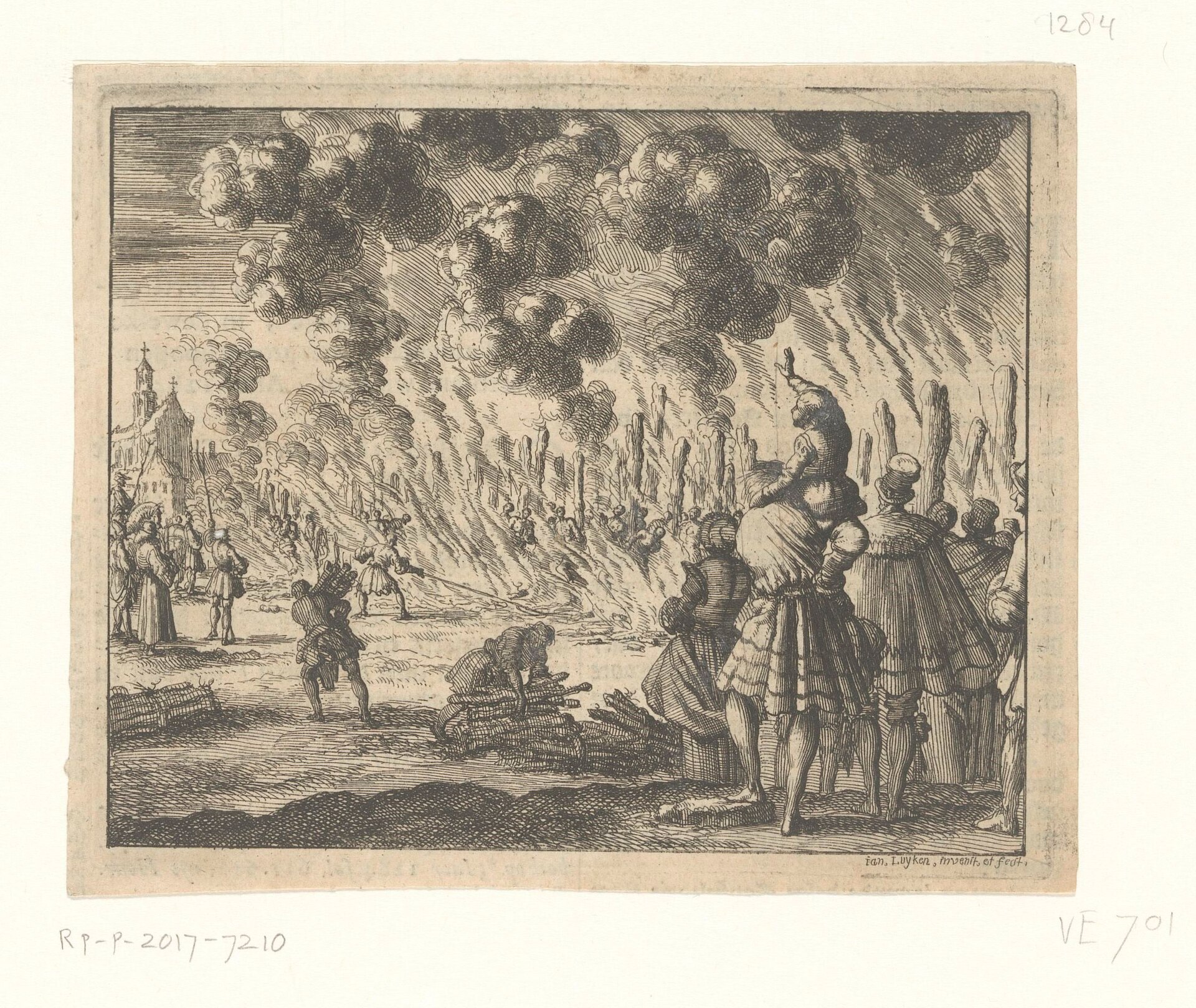
The Waldensians, followers of the Lyon merchant Waldes, were excommunicated as heretics by Pope Lucius III in 1184 and condemned by the Lateran Council in 1215. Bishops had them put in chains, in Aragon death by burning was imposed on them, and the Inquisition persecuted them for centuries. In 1487/88 Pope Innocent VIII called for a crusade against them. In 1655 an army, prompted by a council of the papal Congregation of Propaganda in Turin, destroyed the Waldensian valleys in Piedmont with "horrible barbarity".
- Period
- 1184-1699 (515 years)
- Country
- France, Italy, Spain
- Institutions
- Holy See
Inquisition - Category
- Heresy trials, Crusade, Persecution
- Level of evidence
- B two independent scholarly sources · what does this mean?
- Persons
- Lucius III (Pope)
Odo of Toul (Bishop of Toul)
Innocent VIII (Pope)
Charles Emmanuel II (Duke, ordered the Waldensians to be confined to their old territory)

What happened to the people
Who was affected? Victims and numbers
- Many Waldensians perished in the Albigensian Crusade. Afterwards they were persecuted so persistently, especially around Toulouse, that they disappeared from the towns and fled to remote Alpine valleys. In France and Italy they were a particular target of persecution; the Waldensian Church records many martyrdoms.
Evidence: Encyclopædia Britannica, 11. Auflage (1911), Artikeltext, Verurteilung 1215
„Many were swept away in the crusade against the Albigenses“
Waldenses, Artikeltext, Verurteilung 1215. Original Evidence: Encyclopædia Britannica, 11. Auflage (1911), Artikeltext, Rückzug in die Alpentäler
„Everywhere, and especially in the district round Toulouse, heretics were keenly prosecuted, and before the continued zeal of persecution the Waldenses slowly disappeared from the chief centres of population and tcok refuge in the retired valleys of the Alps.“
Waldenses, Artikeltext, Rückzug in die Alpentäler. Original Evidence: Encyclopædia Britannica, 11. Auflage (1911), Artikeltext, Zeit nach der Reformation
„In France and Italy alike they were marked out as special objects of persecution, and the Vaudois church has many records of martyrdom.“
Waldenses, Artikeltext, Zeit nach der Reformation. Original
How were they charged and sentenced?
- In 1184 at Verona, Pope Lucius III included the Waldensians in a bull against heretics and excommunicated them. The Lateran Council of 1215 formally condemned them.
Evidence: The Catholic Encyclopedia, Bd. 15 (1912), Abschnitt Name and Origin
„Pope Lucius III consequently included them among the heretics against whom he issued a Bull of excommunication at Verona in 1184.“
Waldenses, Abschnitt Name and Origin. Original Evidence: Encyclopædia Britannica, 11. Auflage (1911), Artikeltext, Verurteilung 1215
„Their appeal was not successful, for they were formally condemned by the Lateran council of 1215.“
Waldenses, Artikeltext, Verurteilung 1215. Original - In 1192 Bishop Odo of Toul had all Waldensians put in chains and handed over to the episcopal court. At the Council of Gerona in 1197 death by burning was imposed on them; in 1214 seven Waldensians were executed at Maurillac.
Evidence: The Catholic Encyclopedia, Bd. 15 (1912), Abschnitt The Waldenses in France and Spain
„In 1192 Bishop Otto of Toul ordered all Waldenses to be put in chains and delivered up to the episcopal tribunal.“
Waldenses, Abschnitt The Waldenses in France and Spain. Original Evidence: The Catholic Encyclopedia, Bd. 15 (1912), Abschnitt The Waldenses in France and Spain
„These provisions were renewed by Pedro II at the Council of Gerona (1197), and death by burning was decreed against the heretics .“
Waldenses, Abschnitt The Waldenses in France and Spain. Original Evidence: The Catholic Encyclopedia, Bd. 15 (1912), Abschnitt The Waldenses in France and Spain
„in 1214 seven of these suffered the death penalty at Maurillac“
Waldenses, Abschnitt The Waldenses in France and Spain. Original
What happened to those affected?
- In 1655 an army of French troops of Louis XIV and Irish soldiers marched into the Waldensian valleys and devastated them. It treated the population with horrible barbarity; England under Cromwell called on the Protestant powers to protest. With the revocation of the Edict of Nantes in 1685 a new persecution began, aimed at complete extermination; many Waldensians fled to Switzerland and Germany in 1686 and 1699.
Evidence: Encyclopædia Britannica, 11. Auflage (1911), Artikeltext, Ereignisse von 1655
„entered the Vaudois valleys and spread destruction on every side. They treated the people with horrible barbarity, so that the conscience of Europe was aroused“
Waldenses, Artikeltext, Ereignisse von 1655. Original Evidence: Encyclopædia Britannica, 11. Auflage (1911), Artikeltext, Widerruf des Edikts von Nantes
„The revocation of the edict of Nantes in 1685 began a new period of persecution, which aimed at entire extermination.“
Waldenses, Artikeltext, Widerruf des Edikts von Nantes. Original Evidence: The Catholic Encyclopedia, Bd. 15 (1912), Abschnitt The Waldenses in Italy and other countries
„Later in the same century (1686, 1699) some of them, under stress of renewed persecution , emigrated to Switzerland and Germany .“
Waldenses, Abschnitt The Waldenses in Italy and other countries. Original
Background
Course of events
- Pope Innocent VIII called for a crusade against the Waldensians. The sources give different years for this: according to the Britannica he issued a bull for their extermination in 1487, at the head of which the Archdeacon of Cremona placed himself; according to the Catholic Encyclopedia the crusade followed in 1488.
Evidence: Encyclopædia Britannica, 11. Auflage (1911), Artikeltext, Bulle Innozenz VIII.
„issued a bull for their extermination, and Alberto de' Capitanei, archdeacon of Cremona, put himself at the head of a crusade against them.“
Waldenses, Artikeltext, Bulle Innozenz VIII.. Original Evidence: The Catholic Encyclopedia, Bd. 15 (1912), Abschnitt The Waldenses in France and Spain
„This period of peace was followed in 1488 by a crusade summoned by Innocent VIII against the Waldenses.“
Waldenses, Abschnitt The Waldenses in France and Spain. Original - After joining the Reformation, the Waldensians disappeared from Provence through persecution in 1545.
Evidence: The Catholic Encyclopedia, Bd. 15 (1912), Abschnitt The Waldenses in France and Spain
„The open adoption of Protestantism soon led to the persecution in which Waldensianism disappeared from Provence (1545).“
Waldenses, Abschnitt The Waldenses in France and Spain. Original
Why? Justification and motives (according to the sources)
- In 1650 the papal Congregation for the Propagation of the Faith (Propaganda Fide) set up a council in Turin that had great influence on Duke Charles Emmanuel II. He ordered that the Waldensians be pushed back into their old territory.
Evidence: Encyclopædia Britannica, 11. Auflage (1911), Artikeltext, Ereignisse von 1655
„The Congregation de Propaganda Fide established, in 1650, a local council in Turin, which exercised a powerful influence on Duke Charles Emmanuel II., who ordered that the Vaudois should be reduced within the limits of their ancient territory.“
Waldenses, Artikeltext, Ereignisse von 1655. Original
See also
-
1209-1229 · 20 years
Albigensian Crusade
- France
- Violence
- Crusade
- Persecution
-
1231-1542 · 311 years
The Inquisition: origins, procedure, punishments
- Germany
- France
- Italy
- Spain
- Vatican City
- Expropriation
- Torture
- Heresy trials
- Persecution
Scholarly literature and reference works
- Reference work
The Catholic Encyclopedia, Bd. 15 (1912): Waldenses, 1 January 1912. Original (retrieved 12 Oct 2026) - Reference work
Encyclopædia Britannica, 11. Auflage (1911): Waldenses, 1 January 1911. Original (retrieved 12 Oct 2026)
Change log (3)
The change log is kept in German only.
- : Aktualisiert: Englische Übersetzung
- : Aktualisiert: Personen
- : Aufgenommen
Last changed on 22 October 2026. Is something missing or wrong? Suggest an addition or correction.