 Kirchenakte
1209-1229 · 20 years
· show in timeline
Albigensian Crusade
After the murder of the papal legate Peter of Castelnau, the pope had the Cistercians preach a crusade against the Albigensians in southern France. In 1209 Béziers and Carcassonne were taken. Politically the war ended in 1229 with the Treaty of Paris; the Britannica speaks of massacres of heretics on a large scale during the war.
- Period
- 1209-1229 (20 years)
- Country
- France
- Institutions
- Holy See
Cistercian Order - Category
- Violence, Crusade, Persecution
- Level of evidence
- B two independent scholarly sources · what does this mean?
- Persons
- Innocent III (Pope)
Peter of Castelnau (Cistercian, papal legate, murdered)
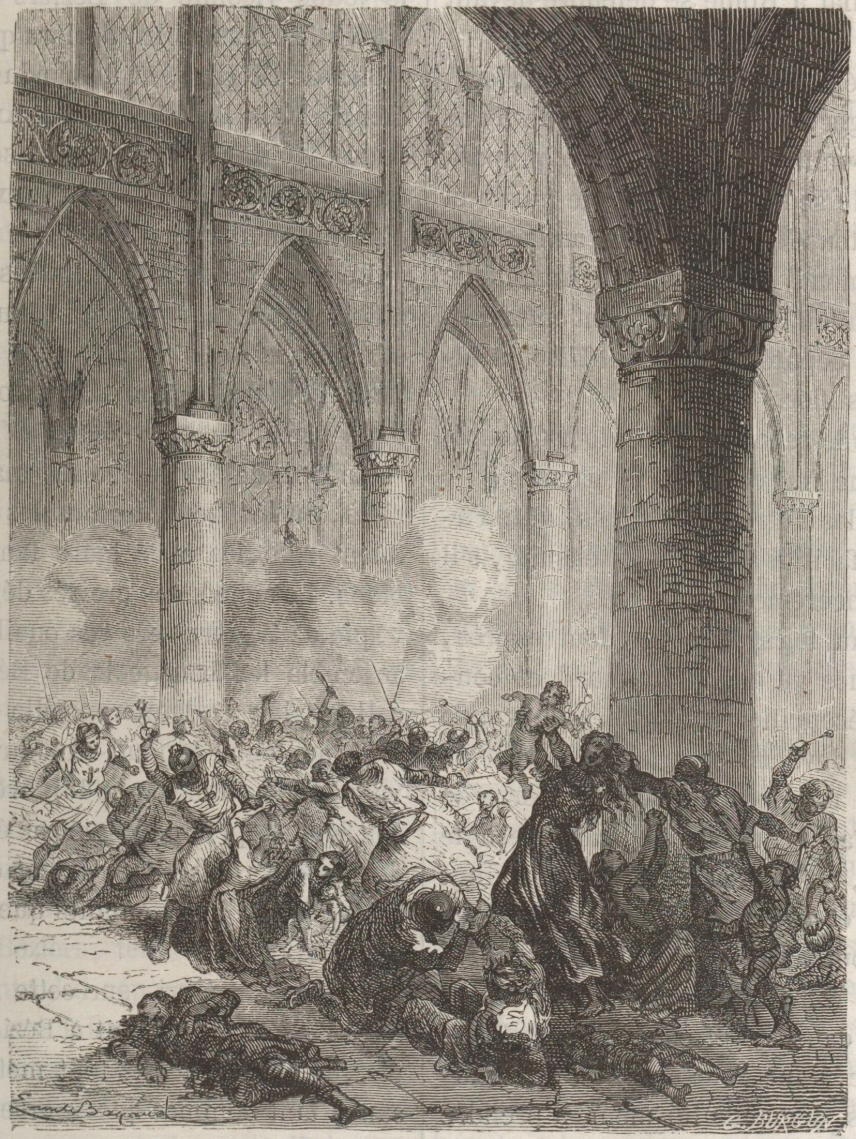

What happened to the people
Who was affected? Victims and numbers
- The Britannica mentions massacres of heretics on a large scale during the war.
Evidence: Encyclopædia Britannica, 11. Auflage (1911), Absatz zur Geschichte
„in spite of the wholesale massacres of heretics during the war“
Albigenses, Absatz zur Geschichte. Original · Archive copy - In 1245 royal officials assisting the Inquisition took the fortress of Montségur; 200 Cathars were burned in one day.
Evidence: Encyclopædia Britannica, 11. Auflage (1911), Artikel Albigenses
„In 1245 the royal officers assisting the Inquisition seized the heretical citadel of Montsegur, and 200 Cathari were burned in one day.“
Albigenses, Artikel Albigenses. Original · Archive copy
How were they charged and sentenced?
- The Church decreed severe penalties for all lay people suspected of sympathy with the heretics (Council of Narbonne 1235, bull Ad extirpanda 1252). The inquisitors' registers give information about their proceedings; after 1330 they contain only a few trials of Cathars.
Evidence: Encyclopædia Britannica, 11. Auflage (1911), Artikel Albigenses
„the church decreed severe chastisement against all laymen suspected of sympathy with the heretics (council of Narbonne, 1235; Bull Ad extirpanda , 1252)“
Albigenses, Artikel Albigenses. Original · Archive copy Evidence: Encyclopædia Britannica, 11. Auflage (1911), Artikel Albigenses
„After 1330 the records of the Inquisition contain but few proceedings against Catharists.“
Albigenses, Artikel Albigenses. Original · Archive copy
What happened to those affected?
- The war destroyed Provençal culture and ended the independence of the princes of the south. Heresy was not thereby wiped out; the Inquisition pursued it throughout the 13th century and much of the 14th, terrorising the region with great inquests. The persecuted hid in forests and mountains.
Evidence: Encyclopædia Britannica, 11. Auflage (1911), Artikel Albigenses
„destroyed the brilliant Provençal civilization“
Albigenses, Artikel Albigenses. Original · Archive copy Evidence: Encyclopædia Britannica, 11. Auflage (1911), Artikel Albigenses
„The independence of the princes of the south was at an end“
Albigenses, Artikel Albigenses. Original · Archive copy Evidence: Encyclopædia Britannica, 11. Auflage (1911), Artikel Albigenses
„vast inquests were set on foot by the Inquisition, which terrorized the district“
Albigenses, Artikel Albigenses. Original · Archive copy Evidence: Encyclopædia Britannica, 11. Auflage (1911), Artikel Albigenses
„the Albigenses became more and more scattered, hiding in the forests and mountains, and only meeting surreptitiously“
Albigenses, Artikel Albigenses. Original · Archive copy
Background
Course of events
- After the murder of Peter of Castelnau, the pope had the Cistercians preach a crusade against the Albigensians.
Evidence: Encyclopædia Britannica, 11. Auflage (1911), Absatz zur Geschichte
„As soon as he heard of the murder of Peter of Castelnau, the pope ordered the Cistercians to preach the crusade against the Albigenses“
Albigenses, Absatz zur Geschichte. Original · Archive copy - From 1198 the pope was Innocent III, who in 1207 called on the King of France to use force.
Evidence: The Catholic Encyclopedia, Bd. 1 (1907), Abschnitt zur Geschichte
„With the accession of Innocent III (1198) the work of conversion and repression was taken up vigorously“
Albigenses, Abschnitt zur Geschichte. Original Evidence: The Catholic Encyclopedia, Bd. 1 (1907), Abschnitt zur Geschichte
„called (1207) upon the King of France, as Suzerain of the County of Toulouse, to use force“
Albigenses, Abschnitt zur Geschichte. Original - In 1209 Béziers and Carcassonne were taken.
Evidence: The Catholic Encyclopedia, Bd. 1 (1907), Abschnitt zur Geschichte
„his principal fortresses, Béziers and Carcassonne, were taken (1209)“
Albigenses, Abschnitt zur Geschichte. Original - Politically the war ended in 1229 with the Treaty of Paris.
Evidence: Encyclopædia Britannica, 11. Auflage (1911), Absatz zur Geschichte
„ended, politically, in the treaty of Paris (1229)“
Albigenses, Absatz zur Geschichte. Original · Archive copy
Why? Justification and motives (according to the sources)
- The war pitted the entire nobility of northern France against that of the south. In its article on the Crusades, the Britannica writes that the Albigensian Crusade showed that the land hunger of the northern French barons could exploit a crusade.
Evidence: Encyclopædia Britannica, 11. Auflage (1911), Artikel Albigenses
„This implacable war, which threw the whole of the nobility of the north of France against that of the south“
Albigenses, Artikel Albigenses. Original · Archive copy Evidence: Encyclopædia Britannica, 11. Auflage (1911), Abschnitt „The Fourth Crusade“
„the Albigensian Crusade against the heretics of southern France was soon afterwards to show that the example could be followed, and that the land-hunger of the north French baronage could exploit a Crusade“
Crusades, Abschnitt „The Fourth Crusade“. Original · Archive copy
Who received the assets, who profited?
- As early as 1163 the Council of Tours decided to imprison the Albigensians and confiscate their property. In the Treaty of Paris of 1229 the King of France dispossessed the House of Toulouse of most of its fiefs and the House of Béziers of all of them. According to the Britannica, the townspeople were embittered by confiscations and religious persecution.
Evidence: The Catholic Encyclopedia, Bd. 1 (1907), Artikel Albigenses
„That of Tours (1163) decreed that the Albigenses should be imprisoned and their property confiscated.“
Albigenses, Artikel Albigenses. Original Evidence: Encyclopædia Britannica, 11. Auflage (1911), Artikel Albigenses
„by which the king of France dispossessed the house of Toulouse of the greater part of its fiefs, and that of Béziers of the whole of its fiefs“
Albigenses, Artikel Albigenses. Original · Archive copy Evidence: Encyclopædia Britannica, 11. Auflage (1911), Artikel Albigenses
„who were embittered by confiscations and religious persecutions“
Albigenses, Artikel Albigenses. Original · Archive copy
See also
-
1184-1699 · 515 years
Persecution of the Waldensians
- France
- Italy
- Spain
- Heresy trials
- Crusade
- Persecution
-
1231-1542 · 311 years
The Inquisition: origins, procedure, punishments
- Germany
- France
- Italy
- Spain
- Vatican City
- Expropriation
- Torture
- Heresy trials
- Persecution
Scholarly literature and reference works
- Reference work
The Catholic Encyclopedia, Bd. 1 (1907): Albigenses, 1 January 1907. Original (retrieved 11 Oct 2026) - Reference work
Encyclopædia Britannica, 11. Auflage (1911): Albigenses, 1 January 1911. Original · Archive copy (retrieved 11 Oct 2026) - Reference work
Encyclopædia Britannica, 11. Auflage (1911): Crusades, 1 January 1911. Original · Archive copy (retrieved 11 Oct 2026)
Change log (5)
The change log is kept in German only.
- : Aktualisiert: Englische Übersetzung
- : Aktualisiert: Tatsachen, Quellen
- : Aktualisiert: Personen
- : Aktualisiert: Tatsachen
- : Aktualisiert: Tatsachen
Last changed on 22 October 2026. Is something missing or wrong? Suggest an addition or correction.