 Kirchenakte
1233-1966 · 733 years
· show in timeline
Book burnings and the Index of Forbidden Books
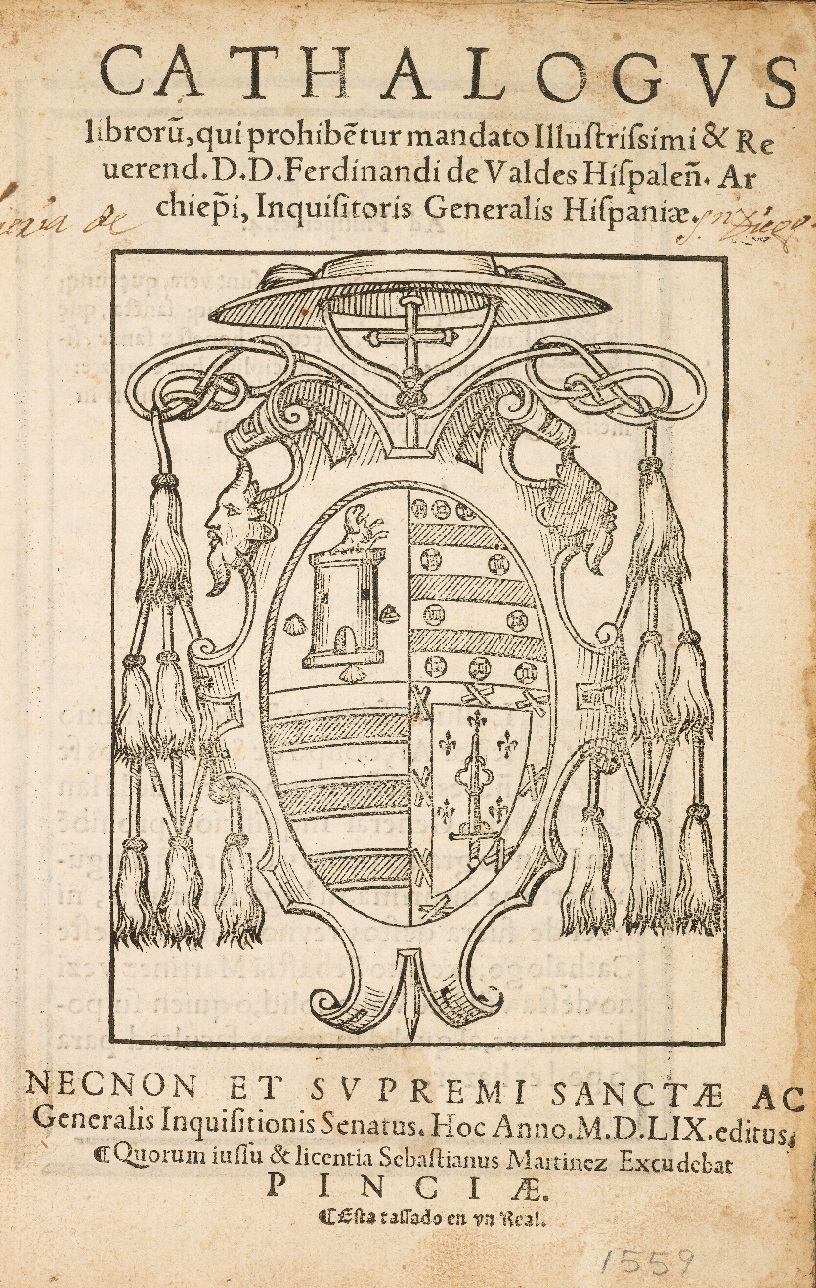
From 1233 papal legates and the Inquisition had Jewish books confiscated and publicly burned, in Paris 12,000 volumes in a single day. In 1515 the Lateran Council made all book printing subject to church examination, on pain of excommunication and destruction of the books. In 1553 Pope Julius III ordered all copies of the Talmud belonging to Jews to be confiscated and burned; the burnings deliberately began on the Jewish New Year. The first Roman Index of 1559 condemned entire authors with all their writings and listed 62 printers. Only in 1966 did the Index lose the force of church law.
- Period
- 1233-1966 (733 years)
- Country
- France, Italy, Spain, Vatican City
- Institutions
- Holy See
Roman Inquisition (Holy Office) - Category
- Anti-Judaism, Persecution, Censorship
- Level of evidence
- A Primary source · what does this mean?
- Persons
- Paul IV (Pope)
Julius III (Pope)
Leo XIII (Pope)

What happened to the people
Who was affected? Victims and numbers
- As early as the 13th century the Inquisition had Jewish books burned: in Montpellier in 1233 on the orders of the papal legate, in Paris shortly afterwards 12,000 volumes in one day, in 1244 twenty cartloads after a confiscation throughout France.
Evidence: Jewish Encyclopedia (1901–1906), Abschnitt „Confiscation in France“
„the papal cardinal-legate gave the command, and in Montpellier a house-to-house search was made for Maimonidean writings“
Confiscation of Hebrew Books, Abschnitt „Confiscation in France“. Original Evidence: Jewish Encyclopedia (1901–1906), Abschnitt „Confiscation in France“
„a public burning of Talmudic and other kindred works was held in Paris, at which 12,000 volumes were destroyed together“
Confiscation of Hebrew Books, Abschnitt „Confiscation in France“. Original Evidence: Jewish Encyclopedia (1901–1906), Abschnitt „Confiscation in France“
„A general confiscation took place throughout France, and on one day fourteen wagon-loads were brought into Paris. Later, six more wagon-loads were added, and all the books were publicly burned on June 17. 1244“
Confiscation of Hebrew Books, Abschnitt „Confiscation in France“. Original - On 12 August 1553, at the suggestion of the Inquisitor General, Pope Julius III ordered all copies of the Talmud belonging to Jews to be confiscated and burned. The burnings began on the Jewish New Year, so that the grief over the holy books would be all the greater.
Evidence: Jewish Encyclopedia (1901–1906), Abschnitt zur Zensur in Italien
„Pope Julius III. decreed (Aug. 12, 1553), at the suggestion of the inquisitorgeneral, the confiscation and burning of all copies ofthe Talmud belonging to Jews“
Approbation, Abschnitt zur Zensur in Italien. Original Evidence: Jewish Encyclopedia (1901–1906), Abschnitt zur Zensur in Italien
„On the first day of the New-Year festival 5314, in order that the sorrow for their holy books might be made the keener, these autos da fé of the books began“
Approbation, Abschnitt zur Zensur in Italien. Original
What happened to those affected?
- Even after the reform by Pope Leo XIII, readers of certain forbidden books automatically incurred excommunication.
Evidence: Encyclopædia Britannica, 11. Auflage (1911), Abschnitt zur Reform Leos XIII.
„The penalty of excommunication ipso facto is only maintained for reading books written by heretics or apostates in defence of heresy“
Index Librorum Prohibitorum, Abschnitt zur Reform Leos XIII.. Original · Archive copy
Background
Course of events
- The first Roman Index of Forbidden Books appeared in 1559 under Pope Paul IV.
Evidence: The Catholic Encyclopedia, Bd. 7 (1910), Abschnitt „Index of Prohibited Books“
„The first Roman "Index of Prohibited Books" (Index librorum prohibitorum), published in 1559 under Paul IV“
Index of Prohibited Books, Abschnitt „Index of Prohibited Books“. Original · Archive copy Evidence: Encyclopædia Britannica, 11. Auflage (1911), Geschichte
„In 1557, and again in 1559, Pope Paul IV., through the Inquisition at Rome, published what may be regarded as the first Roman Index“
Index Librorum Prohibitorum, Geschichte. Original · Archive copy - In 1515 the Lateran Council prescribed that no work may be printed without prior examination by the church authority; the penalty for unauthorised printing was excommunication as well as confiscation and destruction of the books.
Evidence: Encyclopædia Britannica, 11. Auflage (1911), Geschichte
„in 1515 the Lateran council formulated the decree De Impressione Librorum, which required that no work should be printed without previous examination by the proper ecclesiastical authority, the penalty of unlicensed printing being excommunication of the culprit, and confiscation and destruction of the books“
Index Librorum Prohibitorum, Geschichte. Original · Archive copy - The Index of 1559 condemned entire authors together with all their writings and, wholesale, all anonymous books since 1519; a list of 62 printers was appended.
Evidence: Encyclopædia Britannica, 11. Auflage (1911), Geschichte
„authors condemned with all their writings; prohibited books, the authors of which are known; pernicious books by anonymous authors. An excessively severe general condemnation was applied to all anonymous books published since 1519; and a list of sixty-two printers of heretical books was appended“
Index Librorum Prohibitorum, Geschichte. Original · Archive copy
Why? Justification and motives (according to the sources)
- The Church justified the Index by the protection of the integrity of faith and morals.
Evidence: Kongregation für die Glaubenslehre, Absatz 1
„quo Ecclesia ad integritatem fidei et morum, iuxta divinum mandatum, tuendam hucusque usa est“
Notificatio de Indicis librorum prohibitorum conditione, Absatz 1. Original · Archive copy
Response of the Church
- On 14 June 1966 the Congregation for the Doctrine of the Faith declared that the Index no longer had the force of church law with penalties.
Evidence: Kongregation für die Glaubenslehre, Absatz 2
„eundem tamen non amplius vim legis ecclesiasticae habere cum adiectis censuris“
Notificatio de Indicis librorum prohibitorum conditione, Absatz 2. Original · Archive copy Evidence: Kongregation für die Glaubenslehre, Datierung
„Datum Romae, ex Aedibus S. Officii, d. 14 iunii, a. 1966“
Notificatio de Indicis librorum prohibitorum conditione, Datierung. Original · Archive copy - According to the same notification, the Index retains a moral obligation for the conscience of the faithful.
Evidence: Kongregation für die Glaubenslehre, Absatz 2
„nuntiat Indicem suum vigorem moralem servare“
Notificatio de Indicis librorum prohibitorum conditione, Absatz 2. Original · Archive copy
See also
-
1199-1917 · 718 years
Prohibition and restriction of the Bible in the vernacular for lay people
- France
- Spain
- Vatican City
- Censorship
-
1231-1542 · 311 years
The Inquisition: origins, procedure, punishments
- Germany
- France
- Italy
- Spain
- Vatican City
- Expropriation
- Torture
- Heresy trials
- Persecution
-
Person 28 Jun 1476-18 Aug 1559 · 83 years old
Pope Paul IV (Gian Pietro Carafa)
- Italy
- Vatican City
- Anti-Judaism
- Expropriation
- Heresy trials
- Persecution
-
21 Jul 1542-7 Dec 1965 · 423 years
Roman Inquisition (Holy Office)
- Italy
- Vatican City
- Heresy trials
- Persecution
- Censorship
-
Person 1548-1600 · about 52 years old
Giordano Bruno
- Italy
- Heresy trials
- Murder
-
1555-1870 · 315 years
Ghetto of Rome in the Papal States
- Italy
- Vatican City
- Anti-Judaism
- Persecution
-
Person 15 Feb 1564-8 Jan 1642 · 77 years old
Galileo Galilei
- Italy
- Admission
- Heresy trials
- Censorship
Original documents to read
- Church document
Kongregation für die Glaubenslehre: Notificatio de Indicis librorum prohibitorum conditione, 14 June 1966. Original · Archive copy (retrieved 11 Oct 2026)
Scholarly literature and reference works
- Reference work
Jewish Encyclopedia (1901–1906): Confiscation of Hebrew Books. Original (retrieved 11 Oct 2026) - Reference work
Jewish Encyclopedia (1901–1906): Approbation. Original (retrieved 11 Oct 2026) - Reference work
The Catholic Encyclopedia, Bd. 7 (1910): Index of Prohibited Books, 1 January 1910. Original · Archive copy (retrieved 11 Oct 2026) - Reference work
Encyclopædia Britannica, 11. Auflage (1911): Index Librorum Prohibitorum, 1 January 1911. Original · Archive copy (retrieved 11 Oct 2026)
Change log (6)
The change log is kept in German only.
- : Aktualisiert: Englische Übersetzung
- : Aktualisiert: Personen
- : Aktualisiert: Tatsachen
- : Aktualisiert: Tatsachen, Kategorien, Länder, Quellen, Titel, Zeitraum, Zusammenfassung
- : Aktualisiert: Tatsachen
- : Aktualisiert: Tatsachen
Last changed on 22 October 2026. Is something missing or wrong? Suggest an addition or correction.