 Kirchenakte
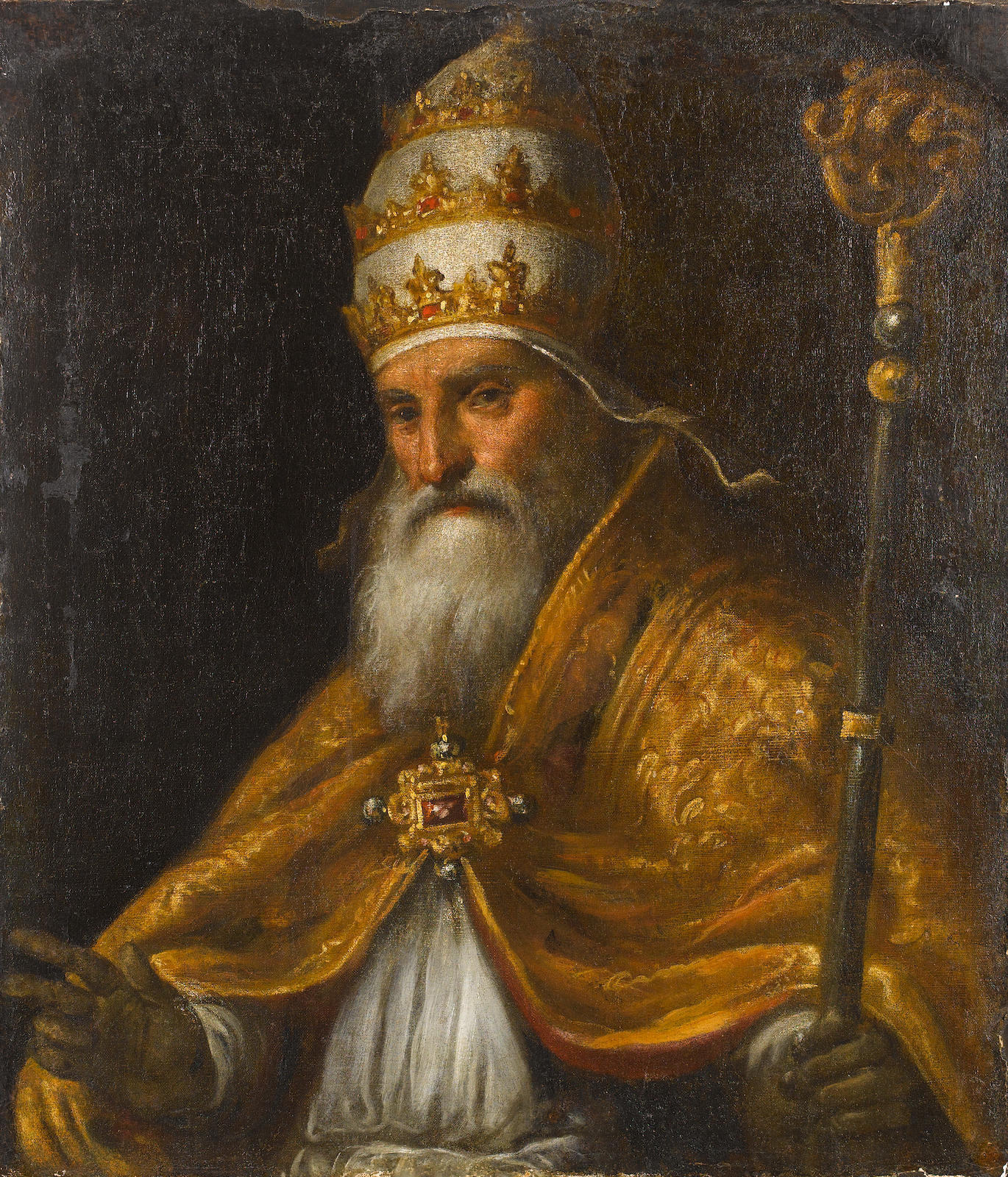
Bull "Hebraeorum gens" 1569, Pope Pius V expels the Jews from the Papal States
On 26 February 1569, as sovereign of the Papal States, Pope Pius V ordered all Jews with the bull "Hebraeorum gens" to leave his territory within three months; only in Rome and Ancona were those already living there allowed to stay. Anyone found there afterwards was to lose all his property and become a slave of the Roman Church forever. About 1000 families had to leave, most of them for the Ottoman Empire; what they left behind, including outstanding debts owed to them, was lost.
- Period
- 1569 (less than 1 year)
- Country
- Italy, Vatican City
- Institutions
- Papal States
Pope Pius V - Category
- Anti-Judaism, Expropriation, Persecution
- Level of evidence
- A Primary source · what does this mean?
- Persons
- Pius V (Pope, ordered the expulsion)

What happened to the people
Who was affected? Victims and numbers
- According to the Jewish Encyclopedia, about 1000 families in total were affected. Some had themselves baptised; the great majority emigrated to the Ottoman Empire. The expulsion took place despite the objections of influential cardinals. The chronology of the same encyclopedia names Bologna as an exception besides Rome and Ancona.
Evidence: Jewish Encyclopedia (1901–1906), Artikel Italy
„the remonstrances of influential and well-meaning cardinals,the Jews (in all about 1,000 families) were actually expelled from all the papal states excepting Rome and Ancona. A few became Christians; but the large majority migrated to Turkey.“
Italy, Artikel Italy. Original Evidence: Jewish Encyclopedia (1901–1906), Artikel Chronology, Jahr 1569
„expels Jews from Papal States except Rome, Bologna, and Ancona“
Chronology, Artikel Chronology, Jahr 1569. Original
How were they charged and sentenced?
- With the bull "Hebraeorum gens" of 26 February 1569, Pius V ordered all Jews of both sexes in the temporal domain of the Church to leave it within three months of its publication.
Evidence: Bullarium Romanum, Turiner Ausgabe (Dalmazzo, Turin 1862), Internet Archive, Bd. 7, Nr. CXXIV, § 1, S. 740
„intra triuin mensium spatium“
Pius V., Bulle „Hebraeorum gens“, 26. Februar 1569, in: Bullarum diplomatum et privilegiorum sanctorum Romanorum pontificum Taurinensis editio, Bd. 7, Bd. 7, Nr. CXXIV, § 1, S. 740. Original Evidence: Jewish Encyclopedia (1901–1906), Artikel Popes, The, Abschnitt Pius V.
„Three years later (Feb. 26, 1569) the pope decreed the expulsion of the Jews from his territory within three months from the date of the promulgation of the edict“
Popes, The (Gotthard Deutsch, Joseph Jacobs), Artikel Popes, The, Abschnitt Pius V.. Original
What happened to those affected?
- Anyone still found after the deadline was to be deprived of all his property, which fell to the treasury, and become a slave of the Roman Church in perpetual servitude; the Church was to have the same rights over him as other masters over their slaves. The same applied to Jews from Rome and Ancona found elsewhere in the Papal States after three months.
Evidence: Bullarium Romanum, Turiner Ausgabe (Dalmazzo, Turin 1862), Internet Archive, Bd. 7, Nr. CXXIV, § 2, S. 740
„rebus omnibus spolientur et fìsci iuribus applicentur, mancipia Romanae Ecclesiae fiant , et in perpctuam servitutem asserantur“
Pius V., Bulle „Hebraeorum gens“, 26. Februar 1569, in: Bullarum diplomatum et privilegiorum sanctorum Romanorum pontificum Taurinensis editio, Bd. 7, Bd. 7, Nr. CXXIV, § 2, S. 740. Original Evidence: Bullarium Romanum, Turiner Ausgabe (Dalmazzo, Turin 1862), Internet Archive, Bd. 7, Nr. CXXIV, § 2, S. 741
„statini Ecclesiae praedictae mancipati in servitutem perpetuam coniicianlur“
Pius V., Bulle „Hebraeorum gens“, 26. Februar 1569, in: Bullarum diplomatum et privilegiorum sanctorum Romanorum pontificum Taurinensis editio, Bd. 7, Bd. 7, Nr. CXXIV, § 2, S. 741. Original
Background
Why? Justification and motives (according to the sources)
- The bull justifies the expulsion by saying that the Jews had delivered their Redeemer to an unworthy death, consumed Christian property through usury, served thieves and robbers as receivers, led women into fornication and given themselves to sorcery, incantations and magical superstition. Apart from modest trade with the East, they were of no use to the state.
Evidence: Bullarium Romanum, Turiner Ausgabe (Dalmazzo, Turin 1862), Internet Archive, Bd. 7, Nr. CXXIV, Einleitung, S. 740
„perfida et ingrata suum Redemptorem indigna morte peremptum impie reprobarit“
Pius V., Bulle „Hebraeorum gens“, 26. Februar 1569, in: Bullarum diplomatum et privilegiorum sanctorum Romanorum pontificum Taurinensis editio, Bd. 7, Bd. 7, Nr. CXXIV, Einleitung, S. 740. Original Evidence: Bullarium Romanum, Turiner Ausgabe (Dalmazzo, Turin 1862), Internet Archive, Bd. 7, Nr. CXXIV, Einleitung, S. 740
„christianorum substanliam usquequaque exinaniverunt“
Pius V., Bulle „Hebraeorum gens“, 26. Februar 1569, in: Bullarum diplomatum et privilegiorum sanctorum Romanorum pontificum Taurinensis editio, Bd. 7, Bd. 7, Nr. CXXIV, Einleitung, S. 740. Original Evidence: Bullarium Romanum, Turiner Ausgabe (Dalmazzo, Turin 1862), Internet Archive, Bd. 7, Nr. CXXIV, Einleitung, S. 740
„eos furum et latronum receptores atque participes“
Pius V., Bulle „Hebraeorum gens“, 26. Februar 1569, in: Bullarum diplomatum et privilegiorum sanctorum Romanorum pontificum Taurinensis editio, Bd. 7, Bd. 7, Nr. CXXIV, Einleitung, S. 740. Original Evidence: Bullarium Romanum, Turiner Ausgabe (Dalmazzo, Turin 1862), Internet Archive, Bd. 7, Nr. CXXIV, Einleitung, S. 740
„sortilegiis, incantationibus magicisque superstitionibus et maleficiis dediti“
Pius V., Bulle „Hebraeorum gens“, 26. Februar 1569, in: Bullarum diplomatum et privilegiorum sanctorum Romanorum pontificum Taurinensis editio, Bd. 7, Bd. 7, Nr. CXXIV, Einleitung, S. 740. Original Evidence: Bullarium Romanum, Turiner Ausgabe (Dalmazzo, Turin 1862), Internet Archive, Bd. 7, Nr. CXXIV, Einleitung, S. 740
„praeter mediocres ex Oriente commeatus“
Pius V., Bulle „Hebraeorum gens“, 26. Februar 1569, in: Bullarum diplomatum et privilegiorum sanctorum Romanorum pontificum Taurinensis editio, Bd. 7, Bd. 7, Nr. CXXIV, Einleitung, S. 740. Original - In Rome and Ancona only the Jews who already lived there were allowed to stay: according to the wording of the bull, to keep alive the memory of the Passion of Christ and to continue the trade with the East, and only if they observed all papal regulations against them.
Evidence: Bullarium Romanum, Turiner Ausgabe (Dalmazzo, Turin 1862), Internet Archive, Bd. 7, Nr. CXXIV, § 2, S. 740
„Urbe Roma et Ancona dumtaxat exceptis, ubi eos solos hebraeos, qui nunc eas babitant , ad praedictam memoriam amplius excitandam“
Pius V., Bulle „Hebraeorum gens“, 26. Februar 1569, in: Bullarum diplomatum et privilegiorum sanctorum Romanorum pontificum Taurinensis editio, Bd. 7, Bd. 7, Nr. CXXIV, § 2, S. 740. Original Evidence: Jewish Encyclopedia (1901–1906), Artikel Popes, The, Abschnitt Pius V.
„while the Jews of Rome and Ancona were permitted to remain, those of the other cities were expelled“
Popes, The (Gotthard Deutsch, Joseph Jacobs), Artikel Popes, The, Abschnitt Pius V.. Original
Who received the assets, who profited?
- The Jews of Ravenna emigrated in May 1569 and had to leave behind their property and all sums owed to them; according to the chronicler Gedaliah ibn Yahya this amounted to over 10,000 ducats in Ravenna and Imola.
Evidence: Jewish Encyclopedia (1901–1906), Artikel Ravenna
„the unfortunate Jews emigrated in the following May, abandoning their property and all the debts due to them, the latter amounting, according to Gedaliah ibn Yaḥya ("Shalshelet ha-Ḳabbalah," p. 96b), to more than 10,000 ducats in Ravenna and Imola“
Ravenna, Artikel Ravenna. Original
Response of the Church
- The next pope, Gregory XIII, permitted their return. In 1593 Clement VIII again issued an expulsion order, which was later revoked.
Evidence: Jewish Encyclopedia (1901–1906), Artikel Popes, The, Abschnitt Pius V.
„They were permitted to return by the next pope, Gregory XIII.“
Popes, The (Gotthard Deutsch, Joseph Jacobs), Artikel Popes, The, Abschnitt Pius V.. Original Evidence: Jewish Encyclopedia (1901–1906), Artikel Popes, The, Abschnitt Pius V.
„Clement VIII. (1592-1604) again issued an edict of expulsion (1593), which was subsequently repealed“
Popes, The (Gotthard Deutsch, Joseph Jacobs), Artikel Popes, The, Abschnitt Pius V.. Original
Original texts
rebus omnibus spolientur et fìsci iuribus applicentur, mancipia Romanae Ecclesiae fiant , et in perpctuam servitutem asserantur
Translation (unofficial)
they shall be deprived of all things and their possessions assigned to the treasury, they shall become slaves of the Roman Church and be brought into perpetual servitude
See also
-
1555-1870 · 315 years
Ghetto of Rome in the Papal States
- Italy
- Vatican City
- Anti-Judaism
- Persecution
-
1577-1847 · 270 years
Compulsory sermons for Jews, Gregory XIII obliges them in 1577 and 1584 to listen to conversion sermons
- Italy
- Vatican City
- Anti-Judaism
- Persecution
Original documents to read
- Church document
Bullarium Romanum, Turiner Ausgabe (Dalmazzo, Turin 1862), Internet Archive: Pius V., Bulle „Hebraeorum gens“, 26. Februar 1569, in: Bullarum diplomatum et privilegiorum sanctorum Romanorum pontificum Taurinensis editio, Bd. 7, 26 February 1569. Original (retrieved 15 Oct 2026)
Scholarly literature and reference works
- Reference work
Jewish Encyclopedia (1901–1906): Popes, The (Gotthard Deutsch, Joseph Jacobs). Original (retrieved 15 Oct 2026) - Reference work
Jewish Encyclopedia (1901–1906): Italy. Original (retrieved 15 Oct 2026) - Reference work
Jewish Encyclopedia (1901–1906): Chronology. Original (retrieved 15 Oct 2026) - Reference work
Jewish Encyclopedia (1901–1906): Ravenna. Original (retrieved 15 Oct 2026)
Change log (3)
The change log is kept in German only.
- : Aktualisiert: Englische Übersetzung
- : Aktualisiert: Zeitraum
- : Aufgenommen
Last changed on 22 October 2026. Is something missing or wrong? Suggest an addition or correction.